In today’s technology-driven world, businesses rely heavily on digital systems to manage daily operations, support employees, and serve customers. From internal communication platforms to cloud-based applications and databases, modern organizations depend on reliable IT infrastructure to remain productive and competitive. However, as technology systems become more complex, maintaining consistent performance and security can be challenging. This is where IT monitoring plays a critical role.
Continuous IT monitoring allows businesses to track the health, performance, and security of their technology systems in real time as part of managed IT services for modern businesses. By implementing 24/7 monitoring solutions, organizations can detect potential issues early, prevent system failures, and maintain uninterrupted operations. Technology experts such as SYNEXRA TECHNOLOGY SOLUTIONS CO., LTD. recognize that proactive IT monitoring is essential for ensuring system stability and protecting digital assets. In this article, we explore the key benefits of 24/7 IT monitoring and why it has become a fundamental component of modern business operations.
Understanding IT Monitoring
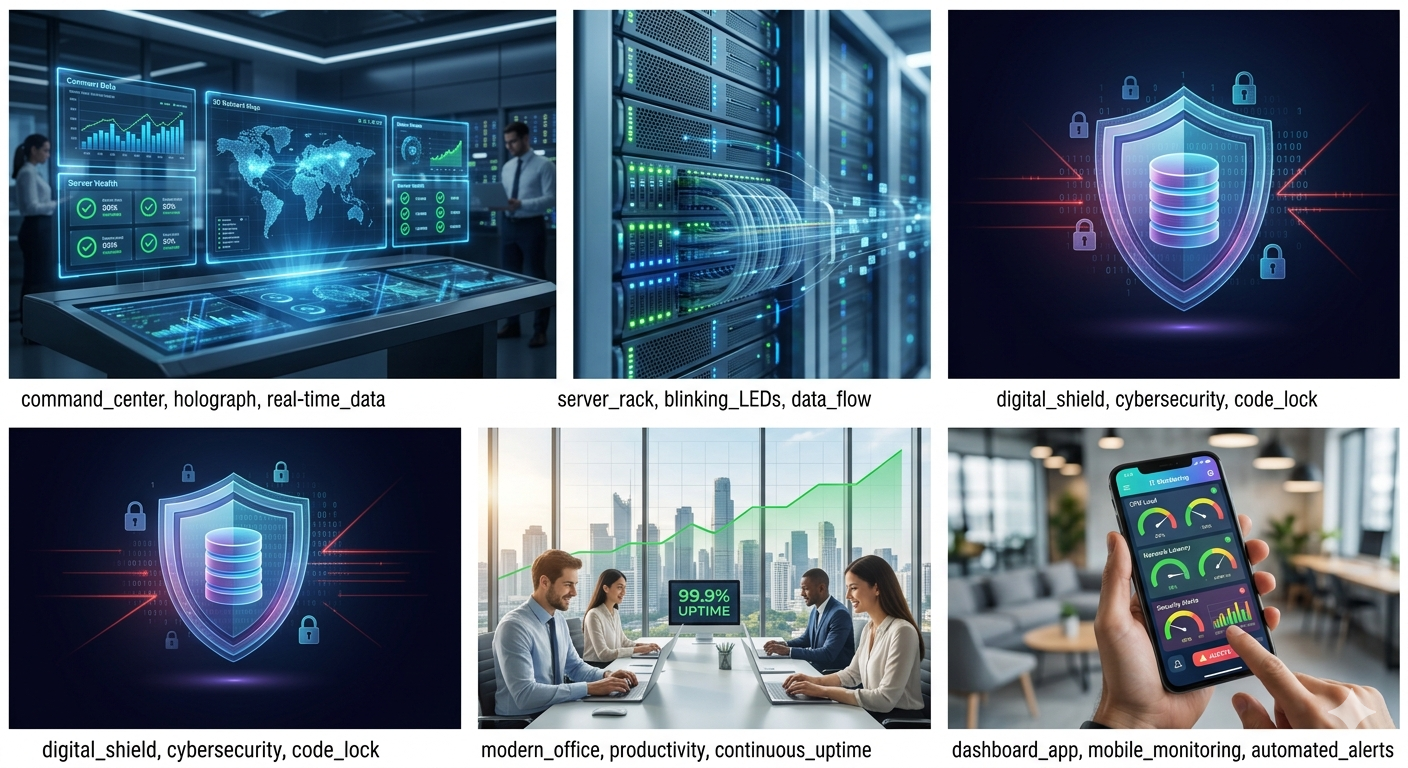
What Is IT Monitoring?
IT monitoring refers to the continuous observation and analysis of an organization’s IT infrastructure to ensure that systems operate efficiently and securely. Monitoring tools collect data from servers, networks, applications, and devices to track performance metrics and detect potential problems.
The main goals of IT monitoring include:
- Maintaining system performance
- Identifying technical issues early
- Preventing downtime
- Enhancing cybersecurity
- Supporting business continuity
Monitoring solutions provide real-time insights into system activity, allowing IT teams to respond quickly to emerging issues.
Components of IT Monitoring
A comprehensive IT monitoring system typically covers several areas of an organization’s technology environment.
Network Monitoring
Network monitoring tracks the performance and availability of network infrastructure, including routers, switches, and internet connections. It helps detect connectivity issues and unusual traffic patterns that may indicate security threats.
Server Monitoring
Server monitoring focuses on tracking server health, including CPU usage, memory utilization, storage capacity, and operating system performance. This ensures that servers continue running efficiently.
Application Monitoring
Application monitoring evaluates the performance of software applications used within the organization. Monitoring tools identify slow response times, errors, or service interruptions that may affect users.
Security Monitoring
Security monitoring detects suspicious activities such as unauthorized login attempts, unusual data transfers, or potential malware attacks.
Why Businesses Need 24/7 IT Monitoring
Preventing System Downtime
System downtime can severely disrupt business operations. If critical systems become unavailable, employees may be unable to access important applications or data.
24/7 IT monitoring helps prevent downtime by identifying performance issues before they escalate into system failures. Monitoring tools alert IT teams when system resources approach critical thresholds, allowing them to take action quickly.
Improving Operational Efficiency
Continuous monitoring provides organizations with valuable insights into how their IT infrastructure performs.
These insights allow businesses to:
- Optimize system resources
- Identify performance bottlenecks
- Improve application efficiency
- Reduce technical disruptions
As a result, employees experience fewer technology-related interruptions and can maintain higher productivity levels.
Enhancing Cybersecurity Protection
Cyber threats are becoming increasingly sophisticated, targeting businesses of all sizes. Continuous monitoring plays a crucial role in detecting and responding to cybersecurity incidents.
Monitoring systems can identify:
- Suspicious login attempts
- Malware activity
- Network intrusions
- Unauthorized data access
Early detection enables IT teams to respond quickly and minimize the potential impact of cyberattacks.
Key Benefits of 24/7 IT Monitoring
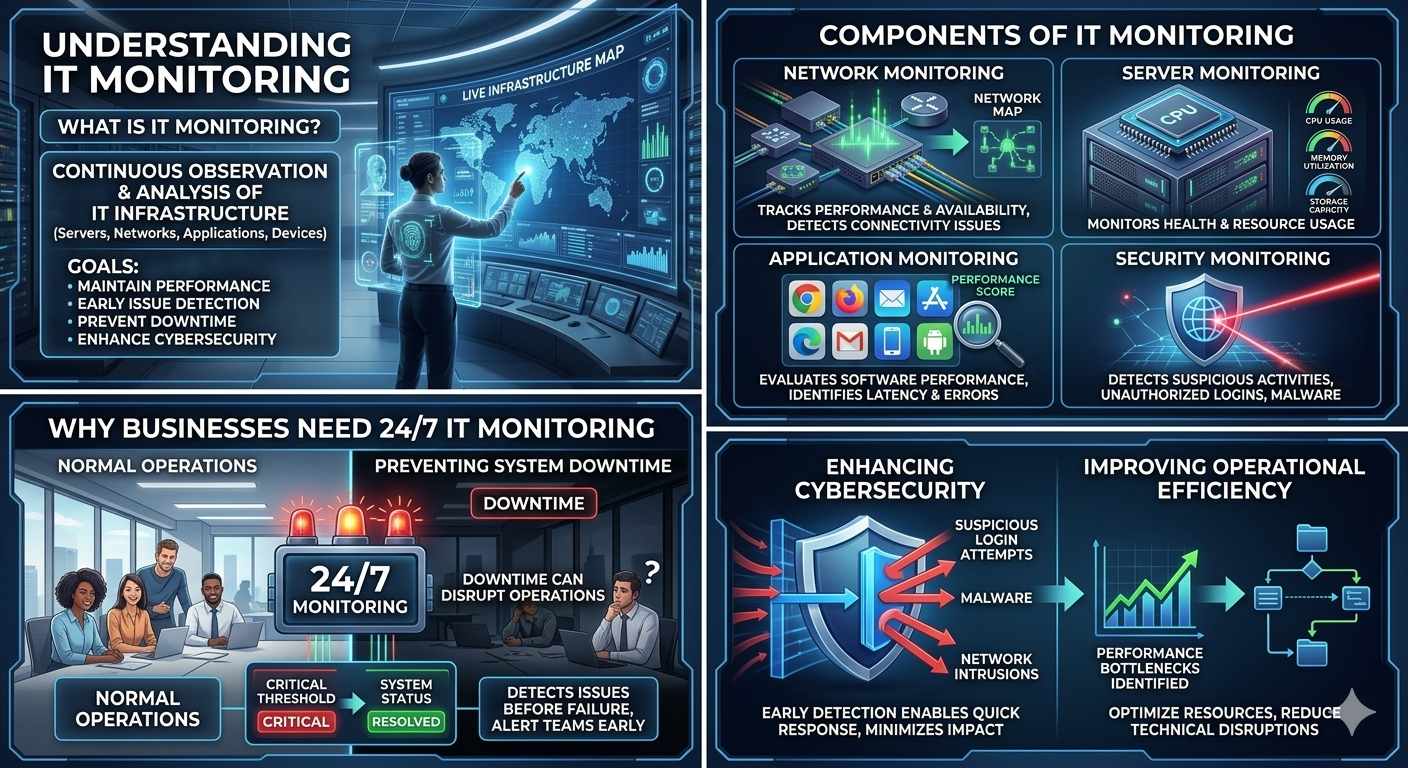
Early Problem Detection
One of the most significant advantages of continuous monitoring is the ability to detect problems before they affect business operations.
Monitoring tools analyze system performance in real time and send alerts when abnormal behavior occurs.
Examples of issues that can be detected early include:
- Server overload
- Network congestion
- Hardware malfunctions
- Application errors
Early detection reduces the likelihood of unexpected system failures.
Faster Incident Response
When technical problems occur, rapid response is essential to minimize disruptions.
24/7 IT monitoring systems provide automated alerts that notify IT teams immediately when issues arise. This allows technicians to investigate and resolve problems quickly.
Faster incident response reduces downtime and helps maintain smooth business operations.
Improved System Performance
Monitoring tools collect detailed performance metrics from IT infrastructure. These metrics allow organizations to analyze system usage and optimize resources.
By identifying inefficiencies or underutilized resources, businesses can improve system performance and reduce unnecessary costs.
Better Capacity Planning
As companies grow, their IT infrastructure must scale accordingly. Monitoring systems provide valuable data that helps organizations plan future upgrades and resource expansions.
Capacity planning helps businesses ensure that their infrastructure can handle increased workloads without compromising performance.
How IT Monitoring Supports Business Continuity
Maintaining Reliable Services
Many businesses depend on digital services that must remain available at all times. For example, e-commerce websites, online banking platforms, and cloud-based collaboration tools require constant system availability.
24/7 monitoring ensures that these services remain stable and responsive.
Supporting Disaster Recovery Strategies
IT monitoring systems play an important role in disaster recovery planning and support a disaster recovery plan for business continuity. By detecting infrastructure issues early, monitoring tools help prevent disasters caused by system failures.
In addition, monitoring systems provide valuable data that supports rapid recovery efforts when disruptions occur.
Protecting Critical Business Data
Data is one of the most valuable assets for modern organizations. Continuous monitoring helps protect sensitive information by detecting unusual access patterns or data transfers.
Security monitoring ensures that data remains protected from unauthorized access or cyber threats.
Technologies Used in IT Monitoring
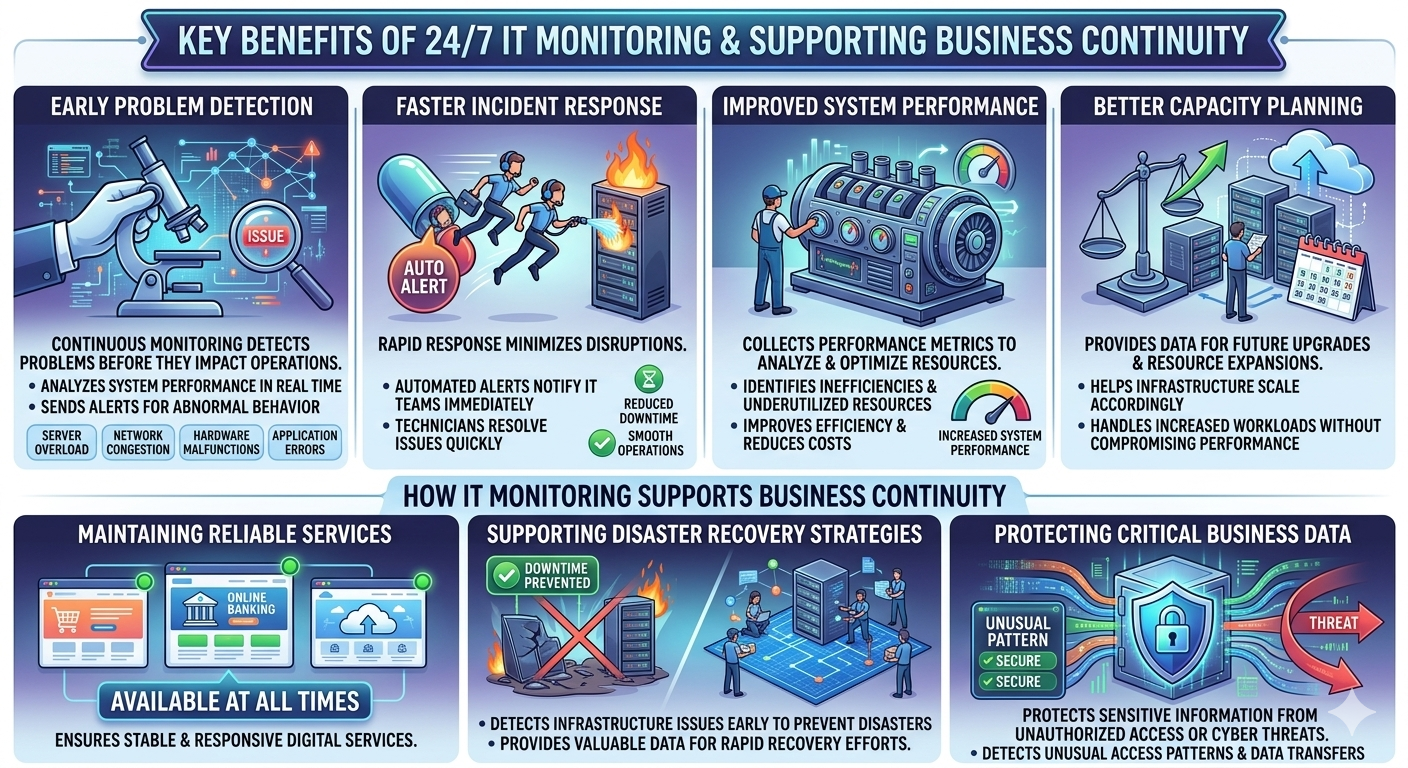
Automated Monitoring Tools
Modern IT monitoring relies heavily on automation technologies. Automated monitoring tools continuously collect system data and analyze it for anomalies.
These tools can automatically trigger alerts or initiate corrective actions when problems are detected.
Artificial Intelligence and Predictive Analytics
Artificial intelligence is increasingly used in IT monitoring systems. AI-powered monitoring tools analyze historical data to predict potential system failures before they occur.
Predictive analytics allows organizations to address issues proactively instead of reacting after problems arise.
Cloud-Based Monitoring Platforms
Many organizations now use cloud-based monitoring platforms to oversee distributed IT environments.
Cloud monitoring solutions provide centralized dashboards that allow IT teams to monitor systems across multiple locations and cloud platforms.
Best Practices for Implementing IT Monitoring
Define Monitoring Objectives
Organizations should begin by defining clear goals for their IT monitoring strategy.
Objectives may include:
- Reducing system downtime
- Improving security visibility
- Enhancing system performance
- Supporting regulatory compliance
Clear goals help guide the implementation of monitoring tools and processes.
Monitor Critical Systems First
Businesses should prioritize monitoring of their most critical systems, including servers, databases, and network infrastructure.
Ensuring the stability of these systems is essential for maintaining business operations.
Use Automated Alerts
Automated alerts ensure that IT teams receive immediate notifications when system issues occur.
Alerts should be configured to trigger when performance metrics exceed defined thresholds or when suspicious activities are detected.
Regularly Review Monitoring Data
Monitoring systems generate large amounts of data that can provide valuable insights into system performance.
Regular analysis of monitoring reports helps organizations identify trends, improve infrastructure planning, and enhance system reliability.
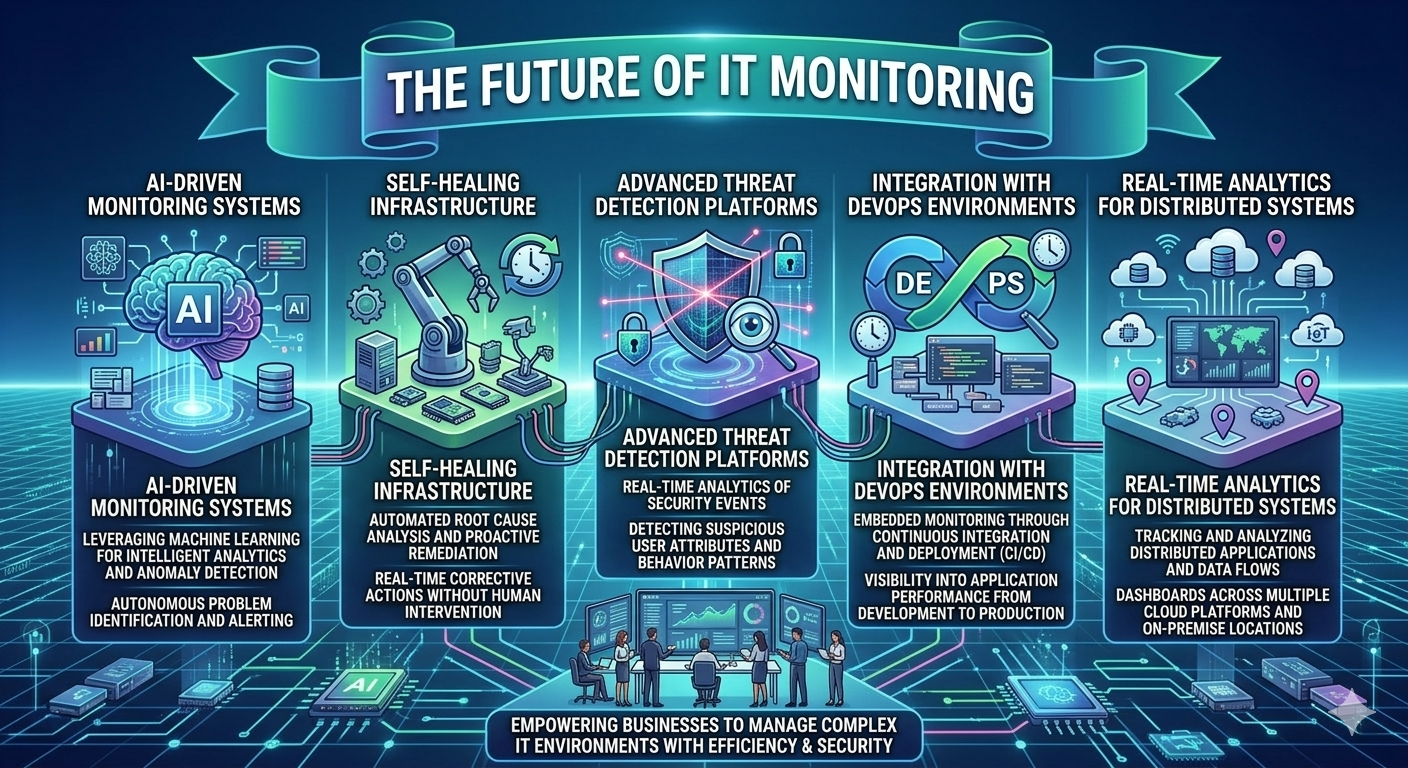
The Future of IT Monitoring
The field of IT monitoring continues to evolve as organizations adopt new technologies and digital strategies.
Emerging trends include:
- AI-driven monitoring systems
- Self-healing infrastructure
- Advanced threat detection platforms
- Integration with DevOps environments
- Real-time analytics for distributed systems
These innovations will allow businesses to manage increasingly complex IT environments with greater efficiency and security.
Conclusion
Reliable IT infrastructure is essential for modern business operations. As organizations become more dependent on digital systems, ensuring system stability and security has become a top priority. Implementing continuous IT monitoring allows businesses to detect problems early, respond quickly to incidents, and maintain consistent system performance.
By investing in 24/7 monitoring solutions, companies can reduce downtime, enhance cybersecurity defenses, and improve operational efficiency. Monitoring technologies also provide valuable insights that help organizations plan infrastructure upgrades and support long-term growth.
Forward-thinking technology partners like SYNEXRA TECHNOLOGY SOLUTIONS CO., LTD. understand that proactive monitoring is a cornerstone of effective IT management. With the right monitoring strategy in place, businesses can maintain reliable technology environments and confidently support their digital operations in an increasingly connected world.