
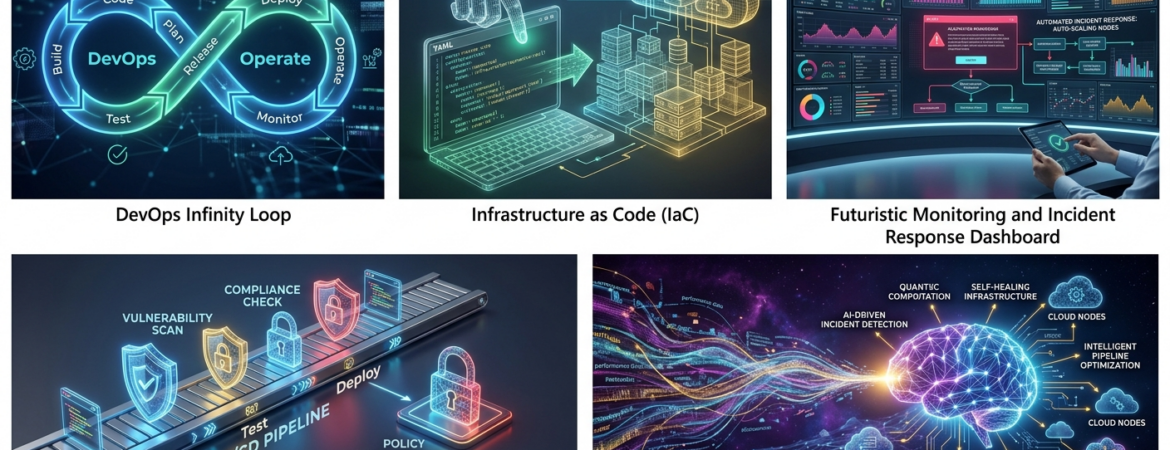
In the rapidly evolving digital landscape, organizations are under constant pressure to deliver software faster, maintain reliability, and scale infrastructure efficiently. Traditional IT operations, which rely heavily on manual processes, struggle to keep pace with modern development cycles. This is where devops automation becomes a critical component of modern technology strategies. By automating repetitive tasks, integrating development and operations workflows, and enabling continuous delivery, automation transforms how teams build, deploy, and maintain applications.
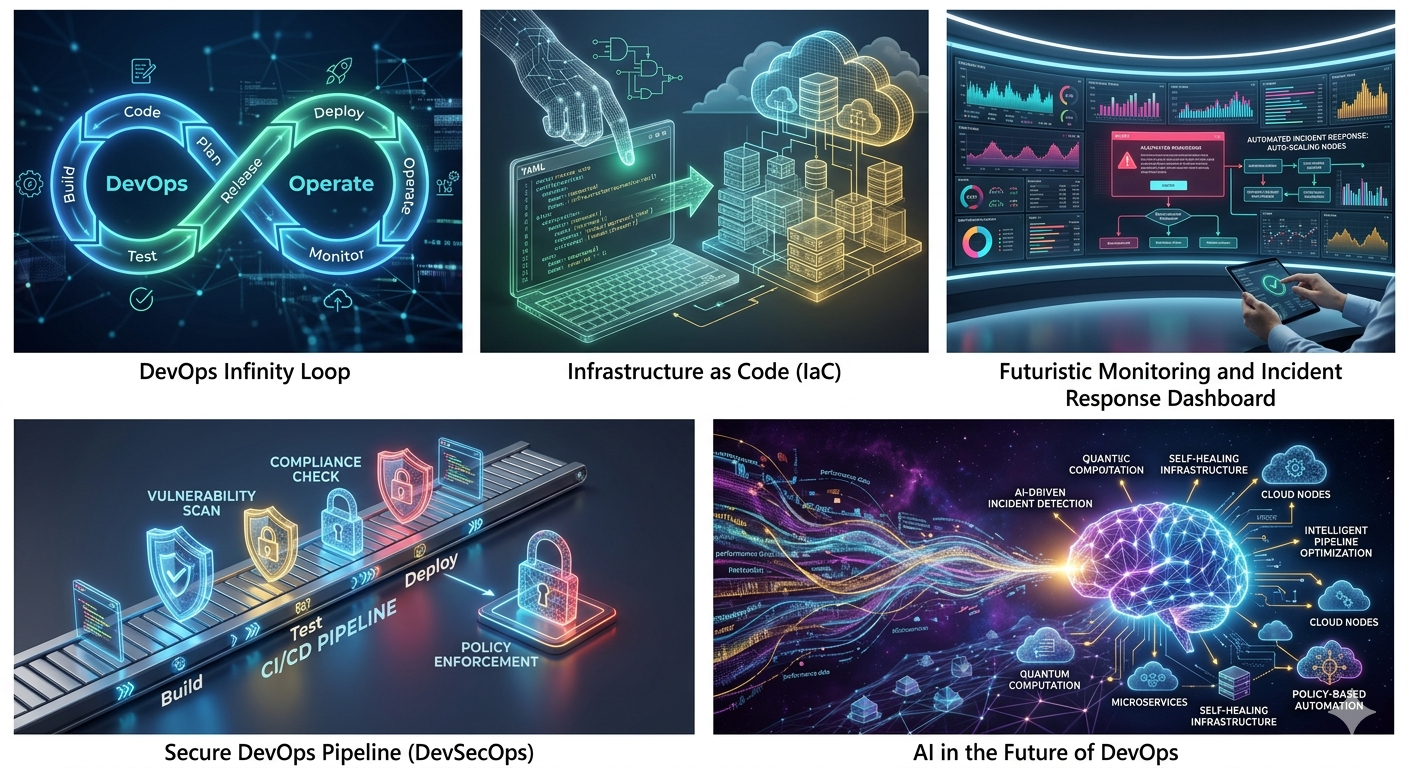
For companies like SYNEXRA TECHNOLOGY SOLUTIONS CO., LTD., leveraging advanced automation strategies allows businesses to accelerate innovation while maintaining system stability and security. As enterprises increasingly adopt cloud-native architectures, microservices, and containerized environments built on modern cloud infrastructure platforms, automation has become the backbone of successful DevOps practices. In this article, we will explore the role of automation in DevOps and modern IT operations, its key benefits, tools, implementation strategies, and best practices for organizations seeking to improve efficiency and scalability.
Understanding DevOps Automation
What is DevOps?
DevOps is a cultural and technical approach that integrates software development (Dev) and IT operations (Ops) to improve collaboration, efficiency, and delivery speed. Instead of working in isolated silos, development and operations teams share responsibilities for building, testing, deploying, and maintaining applications.
The core principles of DevOps include:
- Continuous integration and continuous delivery (CI/CD)
- Infrastructure as Code (IaC)
- Collaboration and transparency
- Automated testing and deployment
- Monitoring and feedback loops
Automation plays a central role in enabling these principles.
What is DevOps Automation?
DevOps automation refers to the use of tools and scripts to automatically perform tasks that were traditionally executed manually within software development and IT operations workflows.
These tasks may include:
- Code integration
- Testing
- Infrastructure provisioning
- Deployment
- Configuration management
- Monitoring and incident response
By implementing devops automation, organizations can reduce human errors, improve system reliability, and accelerate the entire software lifecycle.
Why Automation is Essential in Modern IT Operations
Increasing System Complexity
Modern IT environments are far more complex than traditional infrastructures. Organizations manage:
- Hybrid cloud systems
- Multi-cloud architectures
- Microservices-based applications
- Container orchestration platforms
- Continuous deployment pipelines
Manually managing these systems is inefficient and error-prone. Automation ensures consistent configurations, reliable deployments, and scalable operations, especially for organizations implementing DevOps in modern software development.
Faster Software Delivery
Modern businesses require faster product releases to remain competitive. DevOps automation enables rapid development cycles through automated build, test, and deployment pipelines.
Instead of waiting days or weeks for manual approvals and deployments, automated pipelines can push updates within minutes.
Improved Reliability and Stability
Manual configuration often leads to inconsistencies across environments. Automation ensures that infrastructure and applications are deployed in a consistent and repeatable manner.
This significantly reduces:
- Configuration drift
- Deployment failures
- Production outages
Automation also enables quick rollback mechanisms in case of system issues.

Cost Efficiency
Automation reduces operational overhead by eliminating repetitive manual tasks. IT teams can focus on strategic initiatives rather than routine maintenance activities.
This leads to:
- Reduced operational costs
- Improved resource utilization
- Higher productivity for engineering teams
Key Areas Where DevOps Automation is Applied
Continuous Integration and Continuous Delivery (CI/CD)
CI/CD pipelines are one of the most important applications of devops automation.
Continuous Integration automatically integrates code changes from multiple developers into a shared repository. Each change triggers automated builds and tests to ensure the software remains stable.
Continuous Delivery extends this process by automatically preparing validated code for deployment.
Benefits include:
- Faster release cycles
- Early bug detection
- Improved software quality
- Reduced deployment risks
Infrastructure as Code (IaC)
Infrastructure as Code allows teams to define infrastructure using machine-readable configuration files instead of manual setup.

With IaC, engineers can:
- Provision servers automatically
- Configure networks and databases
- Replicate environments instantly
Popular IaC tools include Terraform, AWS CloudFormation, and Ansible.
This approach ensures that infrastructure environments are consistent, scalable, and version-controlled.
Automated Testing
Testing is another critical component of DevOps automation. Automated tests validate application functionality before deployment.
Types of automated testing include:
- Unit testing
- Integration testing
- Performance testing
- Security testing
By automating tests within CI/CD pipelines, organizations can detect issues early and maintain high-quality code.
Configuration Management
Configuration management tools automate the process of managing system configurations across servers and environments.
These tools ensure that systems maintain a consistent configuration state, preventing unexpected issues.
Examples include:
- Puppet
- Chef
- Ansible
- SaltStack
Automation in configuration management eliminates manual server setup and reduces configuration drift.
Monitoring and Incident Response
Automation also enhances monitoring and incident management processes.
Modern monitoring systems can:
- Automatically detect anomalies
- Trigger alerts
- Execute remediation scripts
For example, if a server experiences high CPU usage, automated workflows can scale resources or restart services without human intervention.
Benefits of DevOps Automation
Increased Deployment Frequency
Organizations implementing DevOps automation often deploy code multiple times per day instead of once every few weeks or months.
This allows businesses to respond quickly to market demands and customer feedback.
Reduced Human Errors
Manual operations are prone to mistakes, especially in complex environments. Automation ensures tasks are executed consistently according to predefined rules.
This significantly reduces system failures caused by human errors.
Enhanced Collaboration
Automation encourages better collaboration between development and operations teams. Shared tools, pipelines, and processes create transparency across the organization.
Teams can track deployments, monitor performance, and resolve issues more efficiently.
Scalability
Automation enables organizations to scale their infrastructure rapidly. Cloud environments can automatically provision new resources based on demand.
This is especially important for applications with fluctuating workloads.

Improved Security
Automation can integrate security checks into development pipelines, a practice known as DevSecOps.
Automated security scans can identify vulnerabilities early in the development process, reducing risks before applications reach production.
Popular Tools for DevOps Automation
CI/CD Tools
CI/CD platforms automate the build, test, and deployment processes.
Common tools include:
- Jenkins
- GitLab CI/CD
- CircleCI
- GitHub Actions
These tools allow teams to build automated pipelines that streamline development workflows.
Containerization and Orchestration
Container technologies enable applications to run consistently across environments.
Popular tools include:
- Docker
- Kubernetes
- OpenShift
Automation helps manage container deployment, scaling, and orchestration.
Infrastructure Automation Tools
Infrastructure automation tools help provision and manage cloud environments.
Examples include:
- Terraform
- AWS CloudFormation
- Pulumi
These tools allow infrastructure configurations to be stored as code and deployed automatically.
Monitoring and Observability Tools
Monitoring platforms automate system health checks and performance tracking.
Popular options include:
- Prometheus
- Grafana
- Datadog
- New Relic
Automation ensures that systems remain observable and issues are detected quickly.
Best Practices for Implementing DevOps Automation
Start with Small Automation Projects
Organizations should begin by automating repetitive tasks such as build processes or testing workflows.
Small automation initiatives help teams gain experience and build confidence before implementing large-scale automation strategies.
Standardize Processes
Automation works best when workflows are standardized. Teams should define clear development, testing, and deployment processes before implementing automation.
Standardization ensures consistency across environments.
Invest in Training and Culture
DevOps automation is not just about tools—it requires a cultural shift. Teams must embrace collaboration, shared responsibility, and continuous improvement.
Providing training for developers and operations engineers helps organizations maximize automation benefits.
Implement Continuous Monitoring
Automation should be accompanied by strong monitoring practices. Monitoring tools help teams detect issues early and evaluate the performance of automated workflows.
Continuous feedback enables ongoing optimization.
Prioritize Security Automation
Security should be integrated throughout the DevOps pipeline. Automated vulnerability scanning, compliance checks, and policy enforcement help maintain secure environments.
DevSecOps practices ensure that security remains a priority without slowing development.
Challenges of DevOps Automation
Toolchain Complexity
DevOps ecosystems involve numerous tools, which can create complexity when integrating them into a cohesive workflow.
Organizations should carefully evaluate tools to avoid unnecessary complexity.
Cultural Resistance
Some teams may resist automation due to fear of job displacement or unfamiliar workflows.
Leadership should emphasize that automation enhances productivity rather than replacing human expertise.
Initial Implementation Costs
Implementing DevOps automation requires investment in tools, infrastructure, and training.
However, the long-term benefits often outweigh the initial costs through improved efficiency and reduced downtime.
Maintaining Automation Systems
Automation pipelines and scripts must be maintained as technologies evolve.
Regular updates and documentation help ensure automation systems remain effective.
The Future of DevOps Automation
The future of devops automation will be shaped by emerging technologies such as artificial intelligence, machine learning, and autonomous operations.
Key trends include:
- AI-driven incident detection and remediation
- Self-healing infrastructure
- Intelligent pipeline optimization
- Policy-based automation
These innovations will further reduce manual intervention and enable highly resilient IT environments.
Organizations that invest in advanced automation strategies today will be better prepared for tomorrow’s digital challenges.

Conclusion
Automation has become a fundamental component of modern DevOps practices and IT operations. By reducing manual processes, improving consistency, and accelerating software delivery, devops automation enables organizations to operate with greater efficiency and agility.
From CI/CD pipelines and Infrastructure as Code to automated monitoring and security integration, automation touches every stage of the software lifecycle. Businesses that adopt comprehensive automation strategies gain a significant competitive advantage in today’s fast-paced digital economy.
As technology continues to evolve, companies must embrace automation not just as a technical tool but as a strategic capability. With expertise and innovation from organizations like SYNEXRA TECHNOLOGY SOLUTIONS CO., LTD., businesses can successfully implement DevOps automation, optimize IT operations, and drive long-term digital transformation.