
In today’s highly digital business environment, data and IT systems are the backbone of almost every organization. Companies rely on digital infrastructure to store critical information, operate applications, and deliver services to customers. However, unexpected events such as cyberattacks, hardware failures, natural disasters, or human errors can disrupt operations and lead to severe data loss. This is why having a well-structured disaster recovery strategy is essential for modern businesses.
A disaster recovery plan ensures that organizations can quickly restore systems and recover important data after unexpected disruptions. Without proper preparation, businesses may face prolonged downtime, financial losses, and damage to their reputation. Forward-thinking technology providers like SYNEXRA TECHNOLOGY SOLUTIONS CO., LTD. recognize that backup and disaster recovery planning is not just a technical requirement but a critical component of business continuity. In this article, we explore the importance of disaster recovery, common threats businesses face, and the strategies companies should implement to protect their operations.
Understanding Backup and Disaster Recovery
What Is Backup?
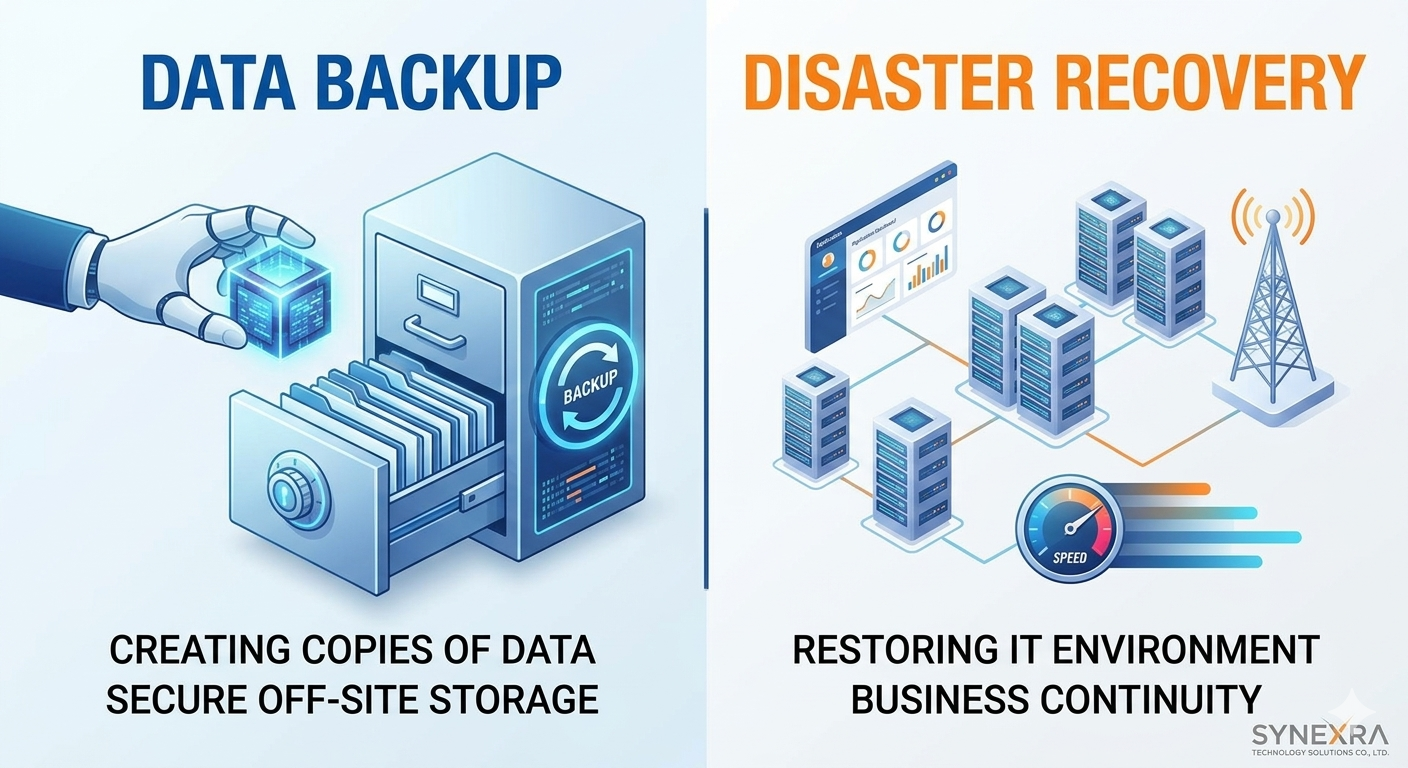
Backup refers to the process of creating copies of data and storing them in secure locations so they can be restored in case of data loss or system failure. These backups act as safety nets that protect businesses from permanent data loss.
Backup systems typically store copies of:
- Databases
- Application data
- System configurations
- Documents and files
- Virtual machines
Backups can be stored locally, offsite, or in cloud environments depending on the organization’s infrastructure.
What Is Disaster Recovery?
Disaster recovery is a broader strategy that focuses on restoring IT systems, applications, and operations after a disruptive event. While backups protect data, disaster recovery ensures that the entire IT environment can be restored quickly.
A comprehensive disaster recovery plan includes:
- Data backup systems
- Infrastructure recovery procedures
- Application restoration strategies
- Communication plans during incidents
- Testing and maintenance processes
Together, backup and disaster recovery help organizations maintain operational resilience.
Why Disaster Recovery Is Critical for Businesses
Preventing Data Loss
One of the main reasons companies invest in disaster recovery solutions is to prevent permanent data loss. Businesses generate and store enormous amounts of data every day, including customer records, financial transactions, and internal documentation, which makes database security for modern businesses essential for protecting sensitive information.
Without proper backup systems, a single incident such as a server crash or ransomware attack could erase years of valuable information.
A disaster recovery strategy ensures that critical data can be restored quickly and accurately.
Minimizing Downtime
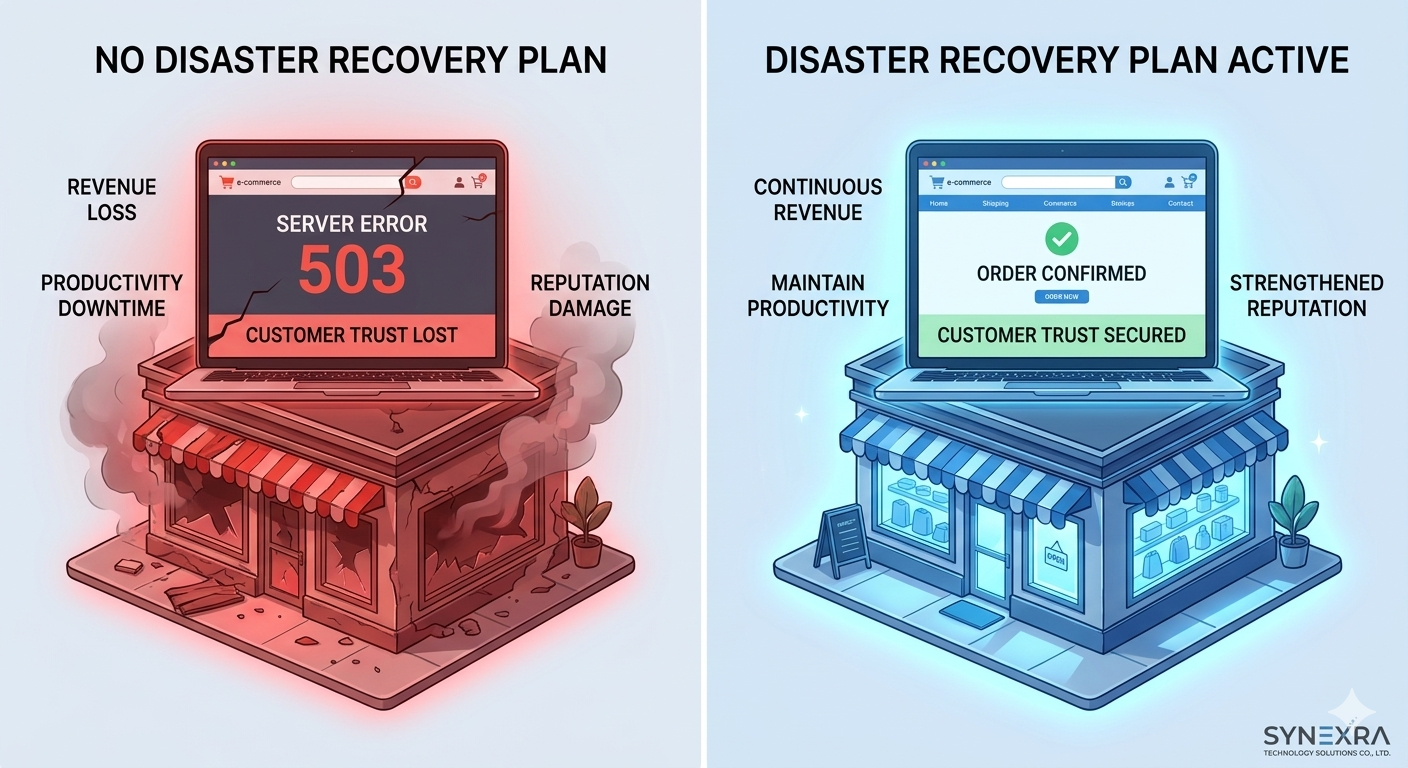
Downtime can be extremely costly for businesses. When systems become unavailable, companies may lose revenue, productivity, and customer trust.
For example, e-commerce platforms, financial services, and online service providers depend on continuous system availability. Even a few hours of downtime can result in major financial losses.
Disaster recovery planning helps organizations restore operations as quickly as possible after disruptions.
Protecting Business Reputation
Customers expect businesses to operate reliably and protect their data. If an organization suffers from prolonged system outages or loses customer data, it can damage its reputation significantly.
Having a reliable disaster recovery plan demonstrates that a company takes operational stability and data protection seriously.
Organizations that recover quickly from incidents maintain stronger relationships with customers and partners.
Ensuring Regulatory Compliance
Many industries must follow strict regulations regarding data protection and business continuity. Regulations often require companies to maintain backup systems and disaster recovery procedures.
Failing to meet these requirements can result in:
- Legal penalties
- Regulatory fines
- Compliance violations
- Loss of operating licenses
Implementing a disaster recovery strategy helps businesses meet regulatory obligations and avoid legal consequences.
Common Disasters That Affect IT Systems
Cyberattacks and Ransomware
Cyberattacks have become one of the most common causes of IT disruptions. Ransomware attacks, in particular, can encrypt critical data and demand payment for its release.
Without reliable backups and disaster recovery procedures, organizations may struggle to recover from such attacks.
Disaster recovery systems enable businesses to restore data from secure backups instead of paying ransom demands.
Hardware Failures
Hardware components such as hard drives, servers, and networking equipment can fail unexpectedly. These failures may result in data corruption or complete system shutdowns.
Regular backups ensure that businesses can quickly restore their systems when hardware problems occur.
Natural Disasters
Natural disasters such as floods, earthquakes, fires, or storms can damage physical infrastructure and data centers.
Companies that rely solely on on-premise systems may lose access to critical data if their facilities are damaged.
Offsite and cloud-based backup solutions provide protection against location-based disasters.
Human Error
Human mistakes are one of the leading causes of data loss. Employees may accidentally delete important files, misconfigure systems, or overwrite critical information.
Backup and disaster recovery systems allow organizations to recover data even when human errors occur.
Key Components of an Effective Disaster Recovery Plan
Risk Assessment
The first step in building a disaster recovery plan is identifying potential risks that could disrupt business operations.
Risk assessments evaluate:
- Cybersecurity threats
- Infrastructure vulnerabilities
- Environmental risks
- Operational dependencies
Understanding these risks allows organizations to design recovery strategies tailored to their specific needs.
Recovery Time Objectives (RTO)
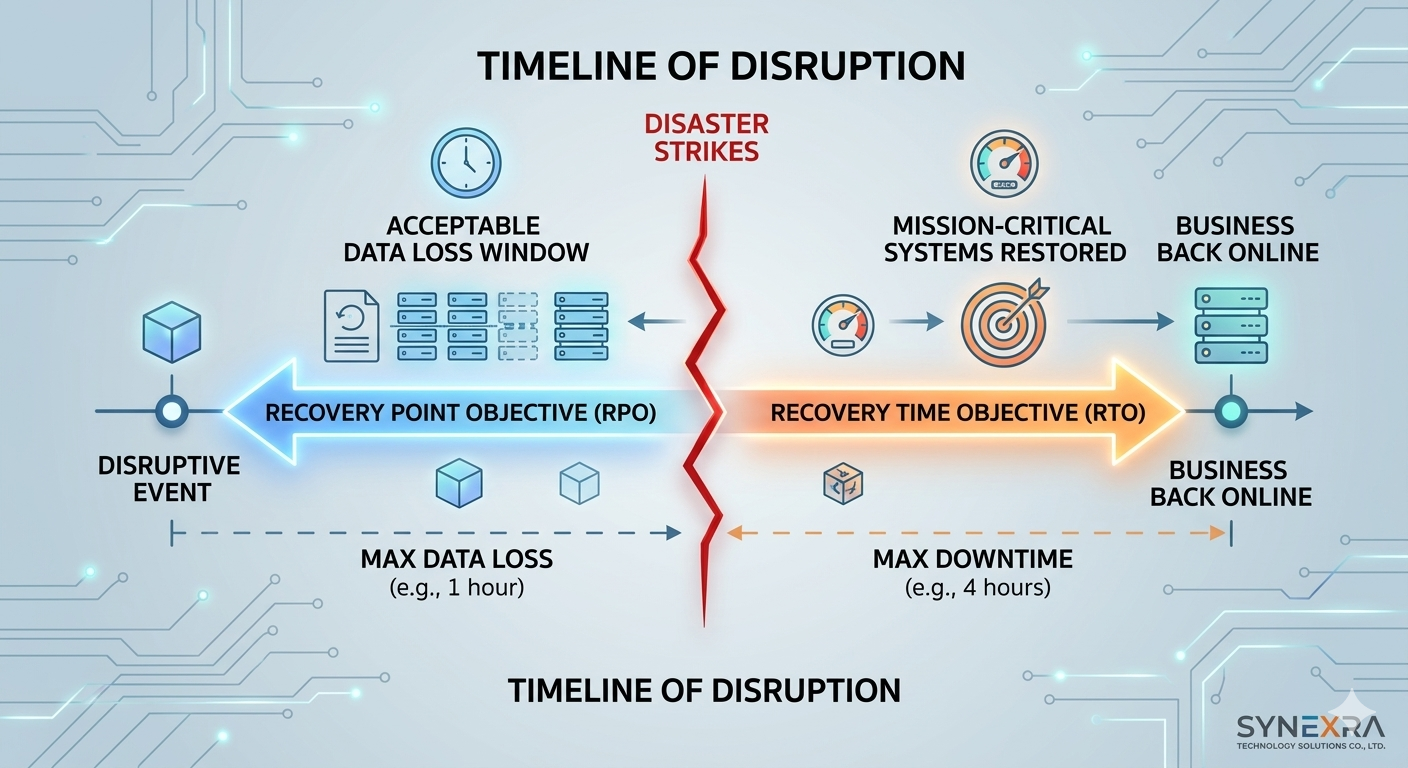
Recovery Time Objective refers to the maximum acceptable time that systems can remain unavailable after a disaster.
Different systems may have different RTO requirements. For example:
- Mission-critical systems may require recovery within minutes
- Internal tools may tolerate longer recovery times
Defining RTO helps organizations prioritize recovery efforts.
Recovery Point Objectives (RPO)
Recovery Point Objective determines how much data loss is acceptable during a disaster.
For example, if backups are created every hour, the maximum potential data loss would be one hour of data.
Businesses must determine acceptable RPO levels based on their operational requirements.
Backup Infrastructure
A reliable backup infrastructure is essential for effective disaster recovery.
Organizations should implement:
- Automated backup processes
- Multiple backup locations
- Secure backup storage
- Regular backup verification
These measures ensure that backups remain available and functional during emergencies.
Types of Backup Solutions
Full Backup
A full backup creates a complete copy of all data within a system. While this provides the most comprehensive protection, it also requires more storage space and longer backup times.
Full backups are often combined with other backup methods for efficiency.
Incremental Backup
Incremental backups store only the data that has changed since the previous backup.
This approach reduces storage requirements and speeds up backup processes.
However, restoring data may require multiple backup files.
Differential Backup
Differential backups store data changes made since the last full backup.
This method offers a balance between storage efficiency and restoration speed.
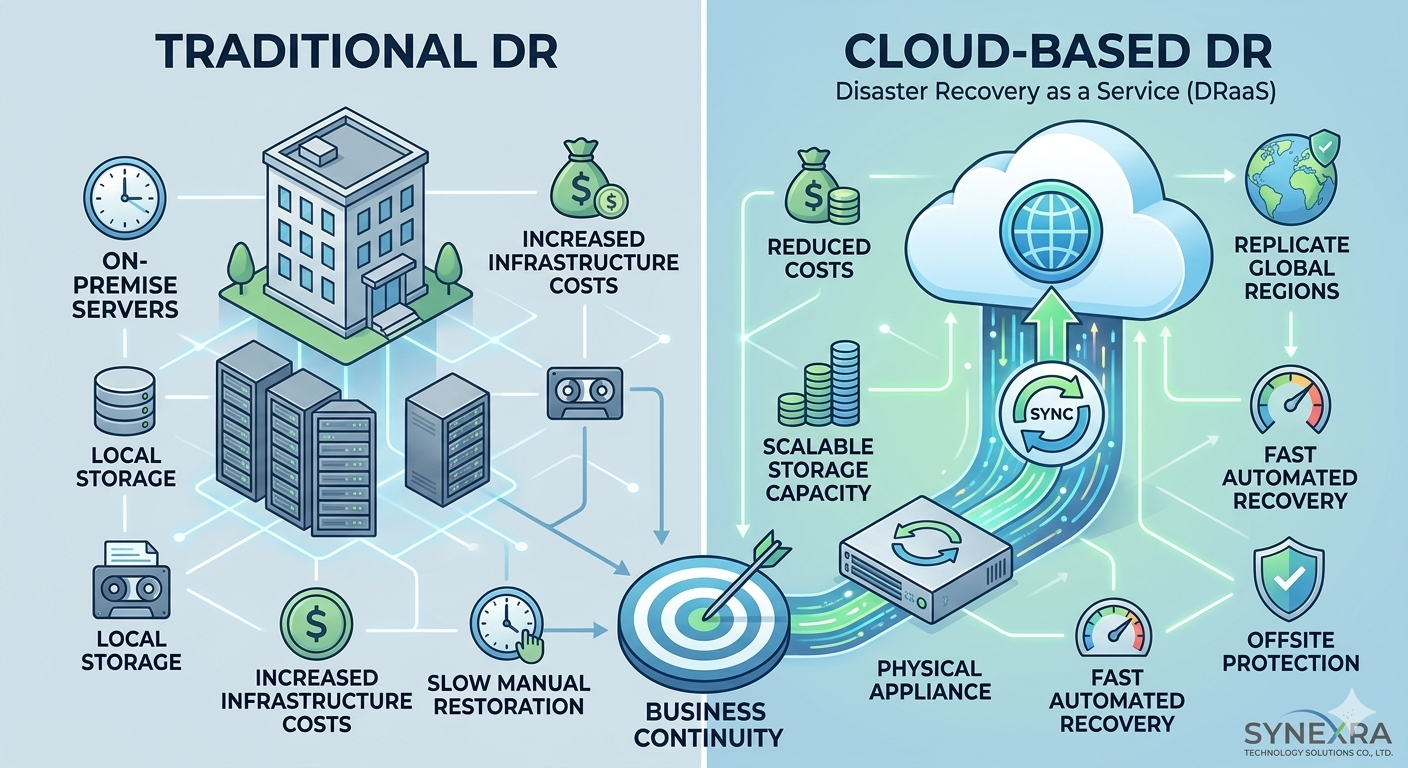
Cloud-Based Disaster Recovery
Advantages of Cloud Backup
Cloud technology has transformed disaster recovery by providing flexible and scalable backup solutions.
Cloud-based disaster recovery offers several advantages:
- Offsite data protection
- Scalable storage capacity
- Faster recovery processes
- Reduced infrastructure costs
- Remote accessibility
Businesses increasingly rely on cloud platforms to enhance their disaster recovery capabilities while implementing cloud security practices for modern businesses.
Disaster Recovery as a Service (DRaaS)
Disaster Recovery as a Service allows organizations to replicate their IT environments in the cloud.
In the event of a disaster, systems can be quickly restored in cloud infrastructure, allowing businesses to continue operations with minimal disruption.
This approach is especially beneficial for companies without large in-house IT resources.
Best Practices for Disaster Recovery Planning
Regular Testing of Recovery Plans
A disaster recovery plan is only effective if it works when needed. Organizations should regularly test their recovery procedures to ensure they function correctly.
Testing helps identify weaknesses and allows teams to improve response strategies.
Automating Backup Processes
Manual backup processes are prone to human error. Automation ensures that backups are performed consistently without relying on manual intervention.
Automated backup systems reduce the risk of missed backups.
Maintaining Documentation
Clear documentation ensures that IT teams understand recovery procedures during emergencies.
Documentation should include:
- Backup locations
- Recovery procedures
- System dependencies
- Emergency contact information
Well-documented plans enable faster recovery during crises.
Training Employees
Employees should understand their roles in disaster recovery scenarios.
Training programs help staff respond appropriately during incidents and follow established procedures.
Prepared teams can significantly reduce the impact of disruptions.
The Future of Disaster Recovery
As technology evolves, disaster recovery strategies continue to improve. Emerging technologies are making recovery processes faster, smarter, and more automated.
Future trends include:
- AI-powered disaster detection
- Automated recovery workflows
- Cloud-native disaster recovery
- Continuous data replication
- Self-healing IT systems
Organizations that adopt these innovations will achieve higher levels of resilience and operational continuity.

Conclusion
In an era where digital systems drive nearly every business function, preparing for unexpected disruptions is no longer optional. A well-designed disaster recovery strategy ensures that organizations can protect their data, restore operations quickly, and maintain customer trust even during crises.
By implementing reliable backup solutions, defining recovery objectives, and regularly testing recovery plans, businesses can significantly reduce the impact of cyberattacks, hardware failures, and other disruptive events.
Forward-looking technology partners like SYNEXRA TECHNOLOGY SOLUTIONS CO., LTD. understand that strong disaster recovery planning is essential for modern organizations. With the right strategies and technologies in place, businesses can safeguard their critical systems and ensure long-term operational resilience in an increasingly unpredictable digital world.