
In the era of digital transformation, many organizations are embracing cloud technologies to improve flexibility, scalability, and operational efficiency. However, transitioning from traditional IT systems to cloud-based environments is not always straightforward. SYNEXRA TECHNOLOGY SOLUTIONS CO., LTD. works with businesses to guide them through the complex process of cloud adoption, helping them overcome technical, operational, and organizational challenges.
While cloud adoption offers numerous advantages, companies must address several obstacles to ensure a successful transition. Understanding these challenges allows organizations to prepare better strategies and avoid costly mistakes during their cloud journey.
This article explores the most common challenges companies face when adopting cloud infrastructure, along with practical solutions to overcome them.
What Is Cloud Adoption?
Cloud adoption refers to the process of integrating cloud computing services into an organization’s IT infrastructure and business operations. Instead of relying solely on on-premise servers and traditional data centers, businesses use cloud platforms to host applications, store data, and run workloads.
Cloud adoption can involve different models, including:

- Public cloud
- Private cloud
- Hybrid cloud
- Multi-cloud environments
The goal of cloud adoption is to improve agility, scalability, and efficiency while reducing the complexity of managing physical infrastructure.
However, implementing cloud technologies requires careful planning and a well-defined strategy, especially when building a modern cloud infrastructure for businesses to ensure long-term success.
Why Businesses Are Accelerating Cloud Adoption
Before exploring the challenges, it is important to understand why cloud adoption is increasing across industries.
Increased Scalability
Cloud platforms allow businesses to scale resources up or down based on demand. This flexibility enables companies to handle traffic spikes and workload changes without investing in additional hardware.
Reduced Infrastructure Costs
Maintaining on-premise infrastructure can be expensive. Cloud adoption eliminates the need for large capital investments in hardware, cooling systems, and data center management.
Faster Innovation
Cloud services provide development environments and tools that allow teams to build, test, and deploy applications faster. This accelerates product development and helps businesses stay competitive.
Improved Accessibility
Cloud-based systems enable employees to access data and applications from anywhere, supporting remote work and global collaboration.
Despite these advantages, cloud adoption also introduces new challenges that organizations must address.
Common Challenges in Cloud Adoption
Many organizations encounter similar obstacles when transitioning to cloud environments.
Lack of Cloud Strategy
One of the biggest challenges in cloud adoption is the absence of a clear migration strategy.
Some companies move workloads to the cloud without evaluating:
- Application dependencies
- Data requirements
- Security needs
- Performance expectations
Without a well-defined strategy, businesses may experience inefficiencies and unexpected costs.
Developing a comprehensive cloud roadmap is essential for successful adoption.
Security and Data Privacy Concerns
Security remains one of the most common concerns associated with cloud adoption.

Organizations must ensure that sensitive data is protected against cyber threats, unauthorized access, and data breaches.
Key security challenges include:
- Misconfigured cloud services
- Weak access control policies
- Data exposure risks
- Compliance with industry regulations
To address these risks, companies must implement strong security frameworks and follow best practices for cloud security.
Cost Management Issues
Although cloud computing can reduce infrastructure costs, poorly managed cloud environments may lead to unexpected expenses.
Common cost-related issues include:
- Over-provisioned resources
- Unused virtual machines
- Inefficient storage usage
- Lack of monitoring tools
Organizations need effective cost management strategies to track cloud spending and optimize resource allocation.
Integration with Legacy Systems
Many businesses still rely on legacy systems that were not designed for cloud environments.
Integrating these systems with cloud platforms can be complex and time-consuming.
Challenges may include:
- Compatibility issues
- Data migration difficulties
- Application dependencies
- Performance limitations
Companies must carefully plan how legacy applications will interact with cloud-based systems.
Skill Gaps and Talent Shortage
Cloud technologies require specialized expertise in areas such as cloud architecture, automation, security, and DevOps in modern software development.
However, many organizations face a shortage of skilled professionals with cloud experience.
Without proper training or support, IT teams may struggle to manage cloud environments effectively.
Investing in training programs or partnering with cloud experts can help bridge this gap.
Operational Challenges in Cloud Adoption
Beyond technical concerns, companies also face operational challenges when adopting cloud infrastructure.
Change Management
Moving to the cloud often requires significant changes in organizational processes and workflows.
Employees must adapt to new tools, technologies, and operational models.
Resistance to change can slow down cloud adoption initiatives.
Successful organizations focus on change management strategies that support employees during the transition.
Governance and Compliance
Cloud environments introduce new governance challenges.
Companies must ensure compliance with industry standards and regulations such as:
- GDPR
- HIPAA
- ISO security standards

Proper governance policies help organizations maintain control over data access and resource usage.
Performance Monitoring
Monitoring cloud performance is essential for maintaining system reliability.
However, cloud environments are often more complex than traditional infrastructure.
Organizations must implement advanced monitoring tools to track:
- Application performance
- System health
- Network traffic
- Resource utilization
Effective monitoring helps prevent downtime and improve system efficiency.
Security Challenges in Cloud Adoption
Security is one of the most critical aspects of cloud adoption.
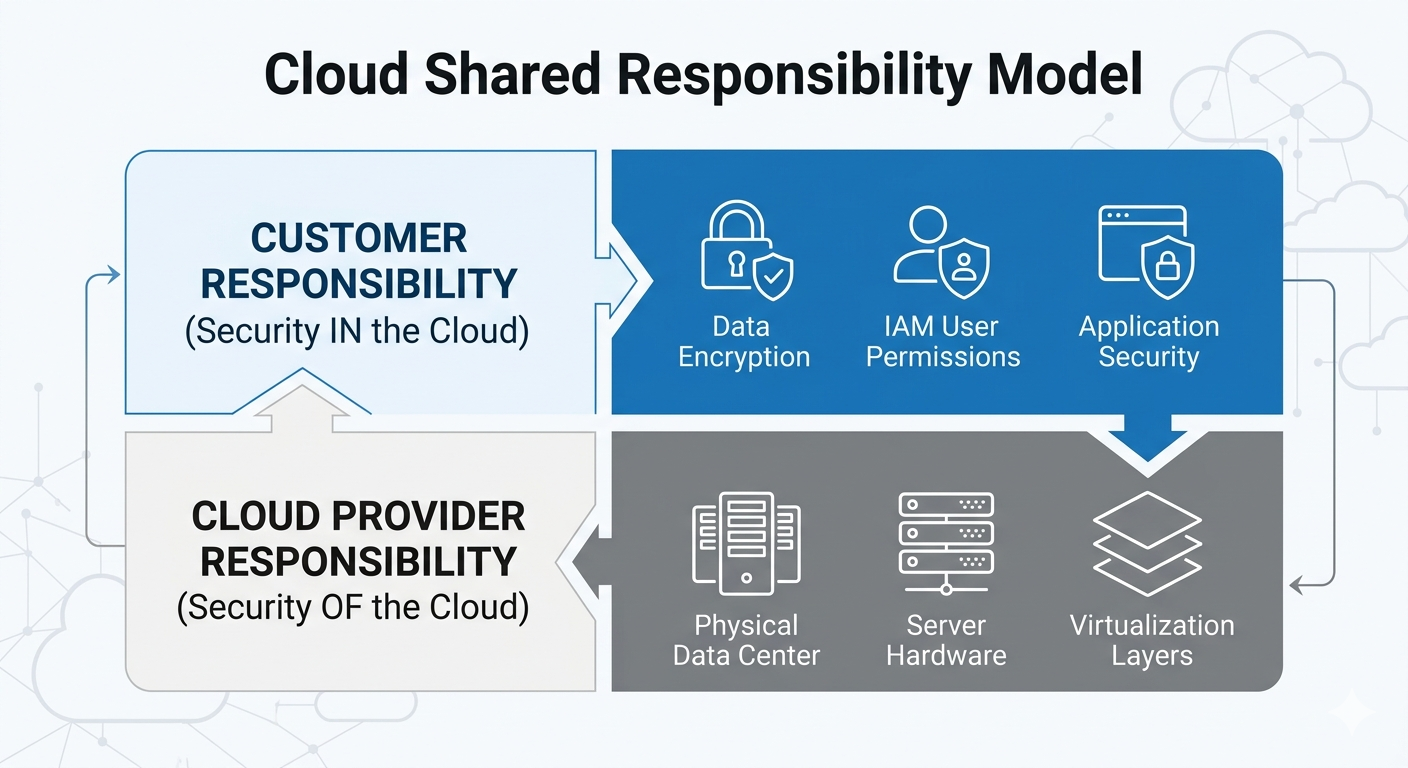
Shared Responsibility Model
Cloud providers operate under a shared responsibility model, where security responsibilities are divided between the provider and the customer.
Cloud providers secure the infrastructure, while customers are responsible for:
- Application security
- Identity management
- Data protection
- Configuration settings
Misunderstanding this model can create vulnerabilities.
Identity and Access Management
Managing user access across cloud environments can be challenging.
Improper access controls may lead to unauthorized data access.
Organizations should implement:
- Multi-factor authentication
- Role-based access control
- Identity management systems
These practices help maintain secure cloud environments.
Data Protection
Sensitive data stored in the cloud must be protected through encryption and secure backup systems.
Companies must ensure that data remains secure both during transmission and while stored in cloud servers.
Best Practices for Successful Cloud Adoption
Organizations can overcome cloud adoption challenges by following proven best practices.
Develop a Clear Cloud Strategy
Before migrating workloads, companies should define a clear cloud adoption strategy.
This strategy should include:
- Migration goals
- Workload prioritization
- Risk management
- Cost optimization plans
Strategic planning reduces the risk of unexpected issues.
Implement Strong Security Measures
Security should be integrated into every stage of cloud adoption.
Organizations should focus on:
- Encryption technologies
- Access control policies
- Security monitoring tools
- Regular security audits
A proactive security approach protects data and systems.
Invest in Employee Training
Cloud adoption requires new technical skills.
Providing training programs for IT teams ensures they can manage cloud environments effectively.
This investment helps organizations maximize the benefits of cloud technologies.
Use Automation Tools
Automation improves efficiency and reduces human errors.

Organizations can automate tasks such as:
- Infrastructure provisioning
- Monitoring
- Deployment processes
- Resource scaling
Automation plays a key role in successful cloud operations.
The Future of Cloud Adoption
Cloud adoption will continue to accelerate as businesses pursue digital transformation initiatives.

Several emerging trends are shaping the future of cloud technology:
- Artificial intelligence integration
- Edge computing
- Multi-cloud strategies
- Serverless architectures
- AI-driven cloud management
These innovations will make cloud platforms more powerful, efficient, and accessible.
Organizations that successfully adopt cloud infrastructure today will be better positioned to adapt to future technological advancements.
Conclusion
Cloud adoption offers tremendous opportunities for businesses to improve scalability, efficiency, and innovation. However, the journey to the cloud is not without challenges. Companies must address issues such as security risks, cost management, skill shortages, and integration complexities to ensure a smooth transition.
By developing a clear strategy and implementing best practices, organizations can overcome these obstacles and fully benefit from cloud technologies.
With the expertise and guidance of SYNEXRA TECHNOLOGY SOLUTIONS CO., LTD., businesses can navigate the complexities of cloud adoption and build a secure, scalable, and future-ready cloud infrastructure.