

In today’s rapidly evolving digital landscape, organizations are constantly searching for ways to improve efficiency, scalability, and innovation. Traditional IT infrastructure often struggles to keep up with the growing demands of modern businesses. As a result, many companies are embracing cloud migration as a strategic solution. With expert guidance from SYNEXRA TECHNOLOGY SOLUTIONS CO., LTD., businesses can transition their systems to the cloud efficiently while minimizing risks and maximizing performance.
Cloud migration is no longer just a technology trend; it has become a fundamental step in digital transformation. From startups to large enterprises, organizations are moving their infrastructure to the cloud to gain flexibility, reduce operational costs, and improve overall system performance.
This article explores why more businesses are moving their infrastructure to the cloud, the benefits of cloud migration, and the best practices for a successful transition.
What Is Cloud Migration?
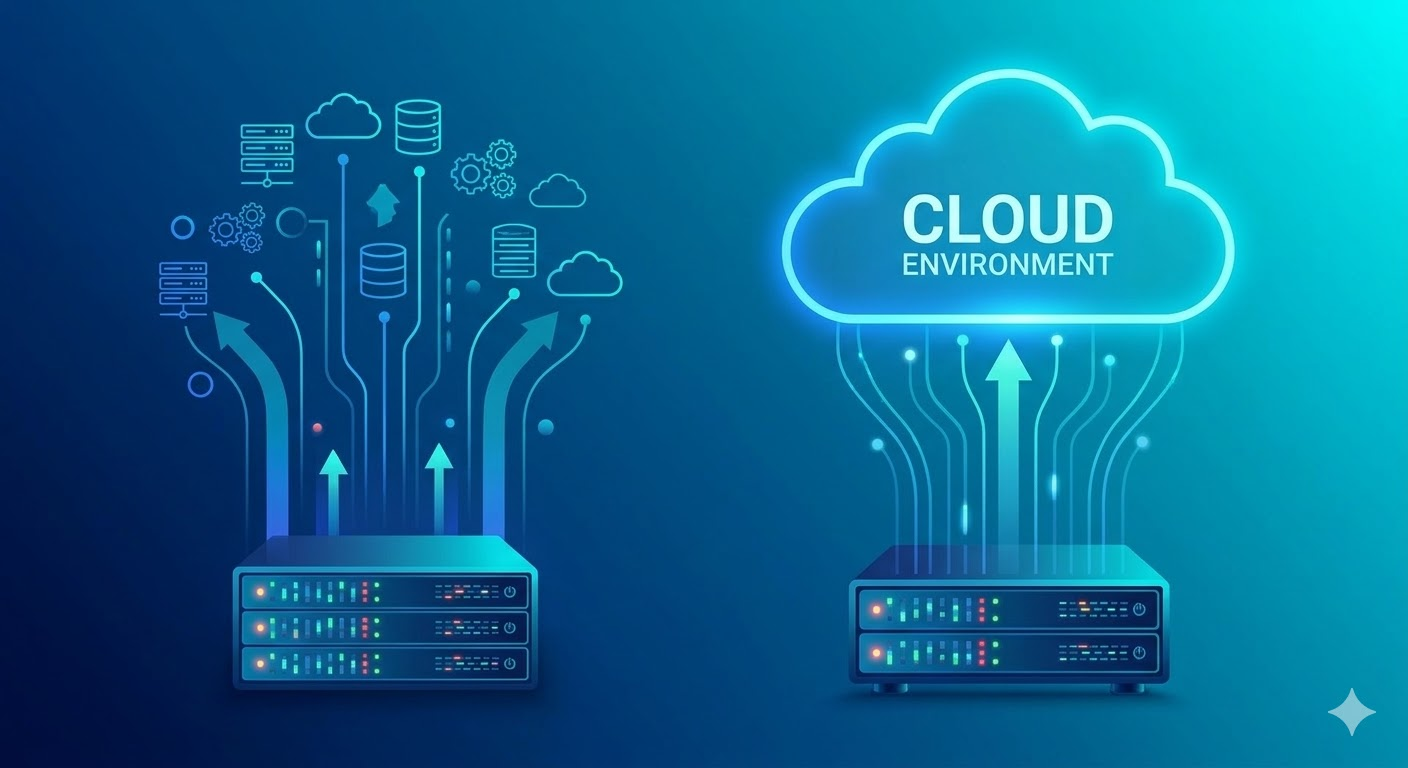
Cloud migration refers to the process of moving digital assets such as applications, databases, data, and IT resources from on-premise infrastructure or legacy systems to a cloud-based environment.
This transition can involve migrating workloads from:
- Physical servers to cloud platforms
- One cloud provider to another
- Hybrid environments combining on-premise and cloud resources
Cloud migration enables organizations to take advantage of cloud computing capabilities such as scalability, automation, and high availability.
Companies typically migrate to major cloud platforms such as:
- Amazon Web Services (AWS)
- Microsoft Azure
- Google Cloud Platform (GCP)
By leveraging modern cloud infrastructure platforms, businesses can modernize their IT systems while improving operational agility.
Key Reasons Businesses Are Moving to the Cloud
There are several important reasons why companies across industries are prioritizing cloud migration strategies.
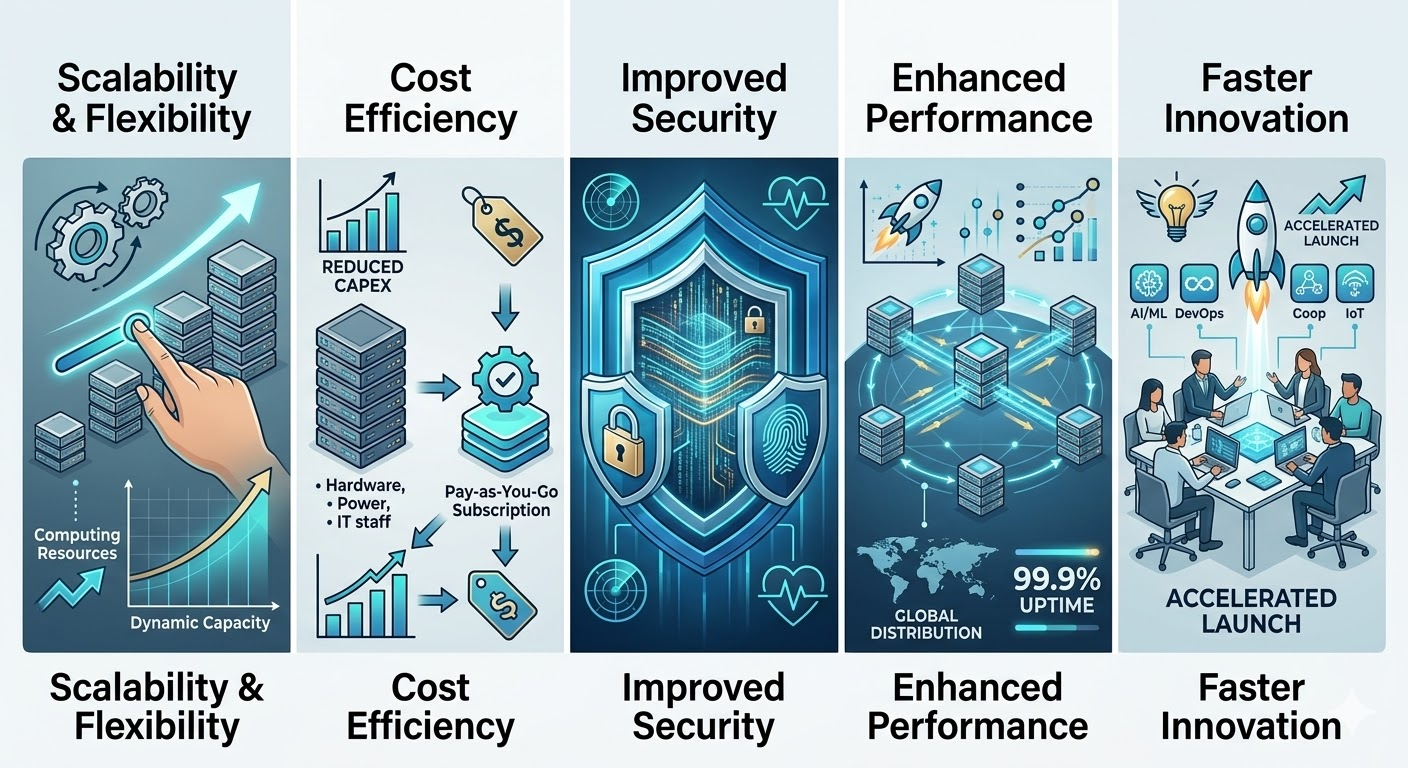
Scalability and Flexibility
One of the most significant advantages of cloud computing is its scalability.
Traditional infrastructure requires businesses to purchase and maintain physical hardware, which can be costly and difficult to scale.
With cloud migration, organizations can:
- Increase computing resources instantly
- Scale storage based on demand
- Adjust capacity during peak workloads
This flexibility allows businesses to grow without worrying about hardware limitations.
Cost Efficiency
Maintaining on-premise infrastructure involves expenses such as hardware purchases, maintenance, cooling systems, electricity, and IT staff.
Cloud migration reduces many of these costs through a pay-as-you-go model, where companies only pay for the resources they use.
This cost model allows businesses to:
- Reduce capital expenditures
- Optimize IT spending
- Allocate resources more efficiently
For many organizations, cloud migration significantly lowers the total cost of ownership.
Improved Security
Security is a major concern for businesses managing sensitive data.
Leading cloud providers invest heavily in advanced security technologies, including:
- Data encryption
- Identity and access management
- Threat detection
- Continuous monitoring
Although organizations must still follow security best practices, cloud platforms often provide stronger security frameworks than traditional data centers.
Enhanced Performance and Reliability
Cloud platforms are designed with high availability and redundancy in mind.
Features such as distributed data centers, automatic backups, and disaster recovery systems help ensure that applications remain operational even during hardware failures.
Cloud migration improves system performance while reducing downtime.
Faster Innovation
Cloud infrastructure enables businesses to deploy new applications and services quickly.
Development teams can test, build, and release products faster using cloud-based environments supported by DevOps practices in modern software development.
This agility allows companies to respond quickly to market demands and stay competitive in fast-changing industries.
Types of Cloud Migration Strategies
Organizations use several different cloud migration approaches depending on their goals and infrastructure complexity.
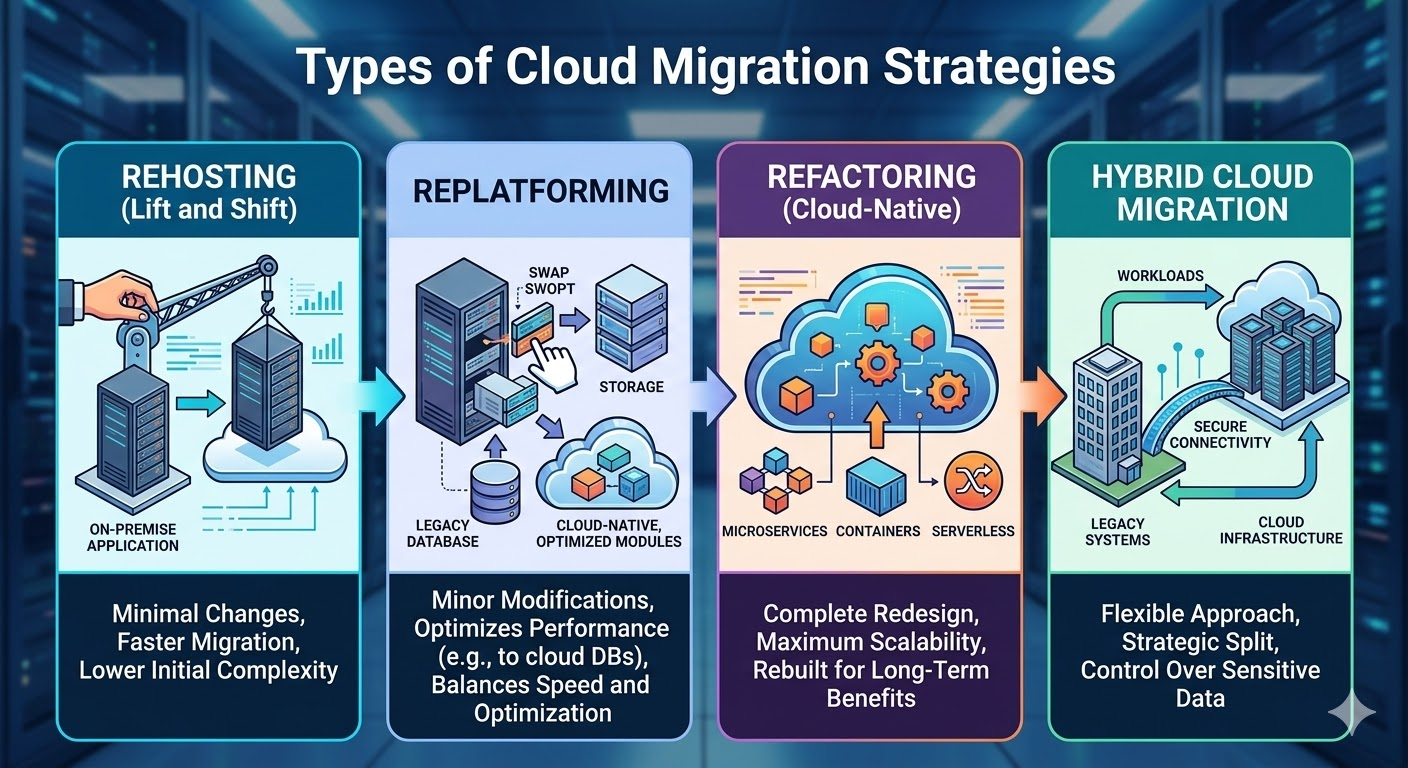
Rehosting (Lift and Shift)
Rehosting involves moving applications to the cloud with minimal changes.
This method is often called lift and shift because workloads are transferred directly from on-premise servers to cloud infrastructure.
Advantages include:
- Faster migration
- Minimal code modifications
- Lower initial complexity
However, rehosting may not fully leverage advanced cloud capabilities.
Replatforming
Replatforming involves making minor modifications to applications to improve performance in cloud environments.
For example, companies may switch to cloud-based databases or storage services while keeping most of the application architecture unchanged.
This strategy balances speed and optimization.
Refactoring
Refactoring requires redesigning applications to take full advantage of cloud-native technologies.
Applications may be rebuilt using microservices, containers, or serverless architectures.
Although refactoring requires more time and investment, it often delivers greater scalability and long-term benefits.
Hybrid Cloud Migration
Some businesses adopt a hybrid approach where certain workloads remain on-premise while others move to the cloud.
This strategy is useful for organizations with strict regulatory requirements or legacy systems that cannot be easily migrated.
Hybrid environments provide flexibility while maintaining control over sensitive data.
Benefits of Cloud Migration for Modern Businesses
Cloud migration offers several advantages that help organizations improve their IT infrastructure and operational efficiency.
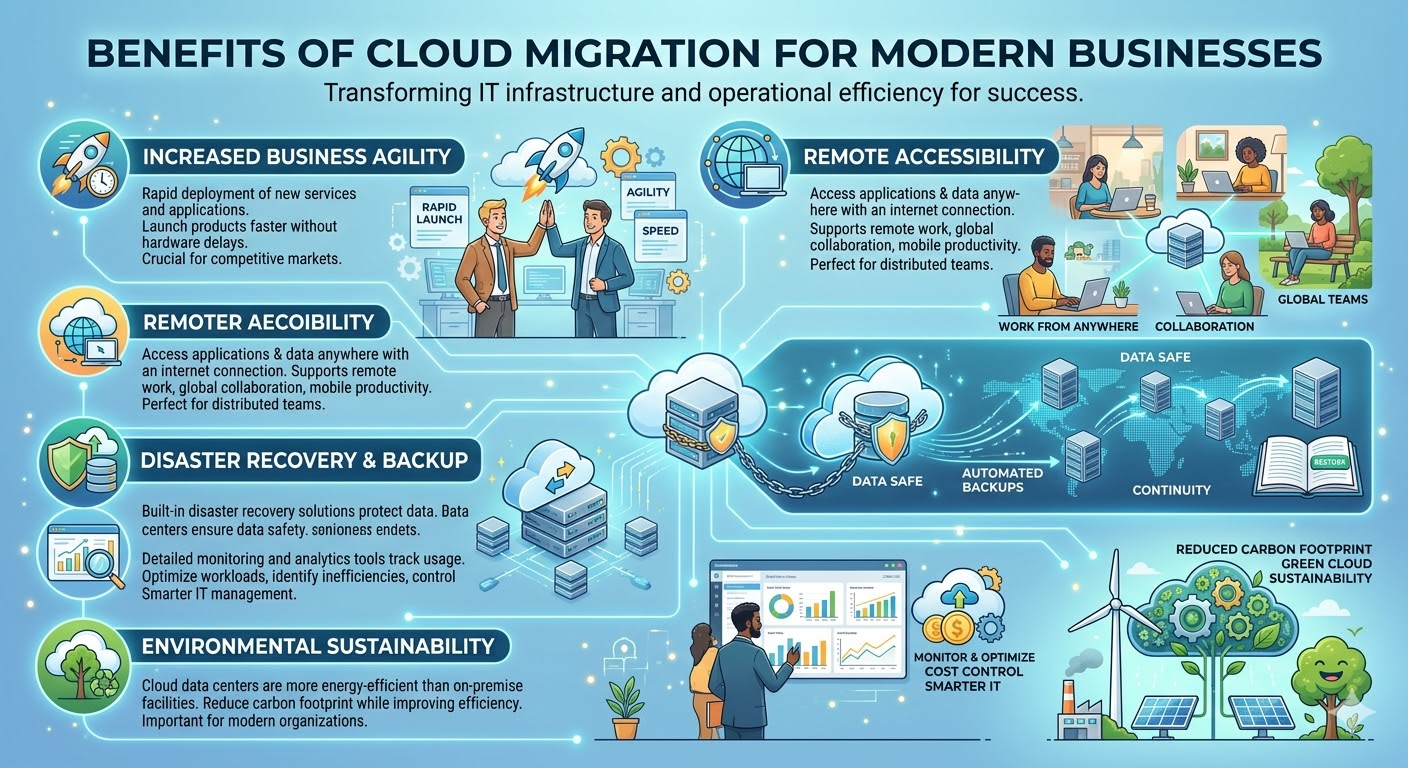
Increased Business Agility
Cloud platforms enable rapid deployment of new services and applications.
Businesses can launch new products faster without waiting for hardware procurement or infrastructure setup.
This agility is critical in competitive markets where speed is a major advantage.
Remote Accessibility
Cloud-based systems allow employees to access applications and data from anywhere with an internet connection.
This flexibility supports remote work, global collaboration, and mobile productivity.
Many companies rely on cloud infrastructure to enable distributed teams.
Disaster Recovery and Backup
Cloud providers offer built-in disaster recovery solutions that protect data from unexpected events.
Automated backups and geographically distributed data centers ensure that information remains safe and recoverable.
This capability significantly improves business continuity.
Better Resource Management
Cloud platforms provide detailed monitoring and analytics tools that help organizations track resource usage.
Businesses can optimize workloads, identify inefficiencies, and control costs more effectively.
These insights enable smarter IT management.
Environmental Sustainability
Cloud data centers are often more energy-efficient than traditional on-premise facilities.
By migrating to the cloud, businesses can reduce their carbon footprint while improving operational efficiency.
Sustainability is becoming an increasingly important factor for organizations worldwide.
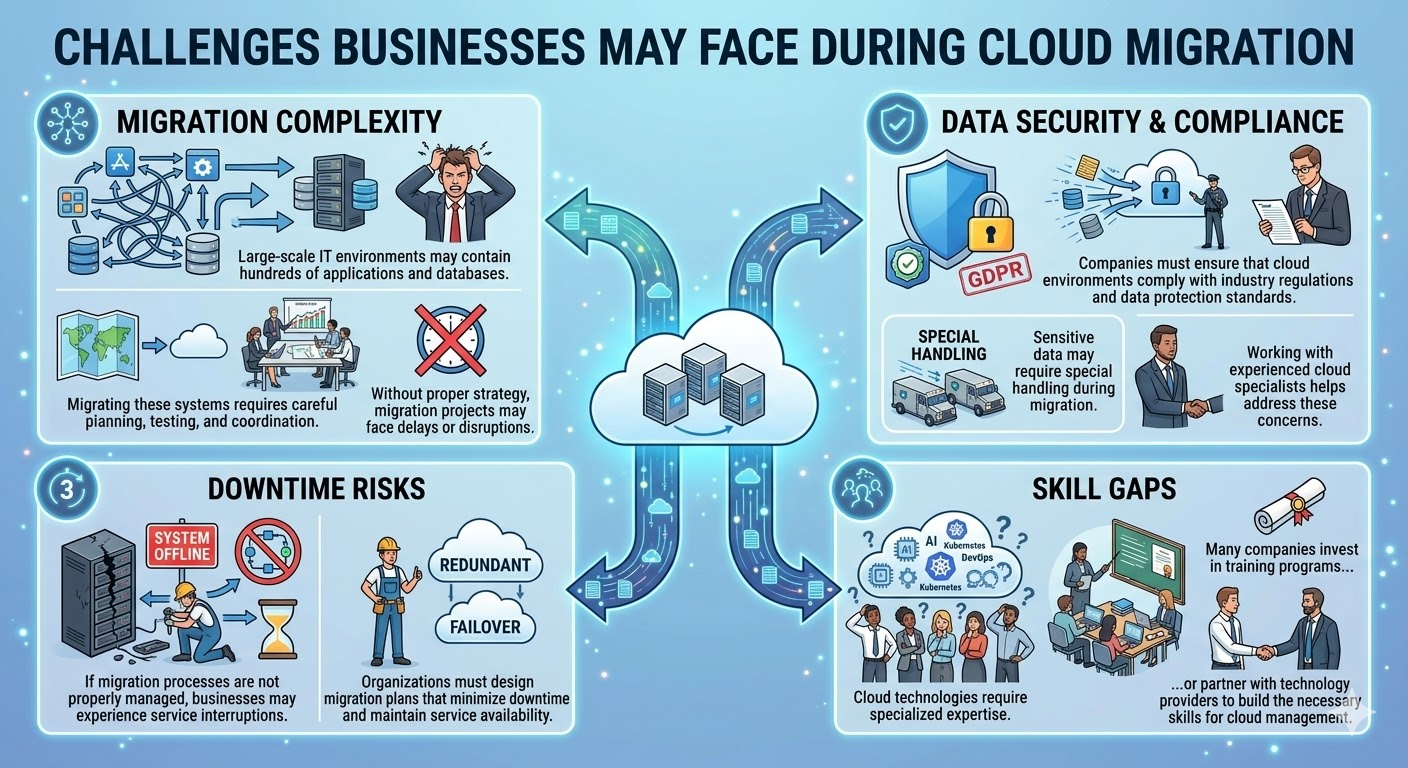
Challenges Businesses May Face During Cloud Migration
While cloud migration provides many advantages, organizations should also prepare for potential challenges.
Migration Complexity
Large-scale IT environments may contain hundreds of applications and databases.
Migrating these systems requires careful planning, testing, and coordination.
Without proper strategy, migration projects may face delays or disruptions.
Data Security and Compliance
Companies must ensure that cloud environments comply with industry regulations and data protection standards.
Sensitive data may require special handling during migration.
Working with experienced cloud specialists helps address these concerns.
Downtime Risks
If migration processes are not properly managed, businesses may experience service interruptions.
Organizations must design migration plans that minimize downtime and maintain service availability.
Skill Gaps
Cloud technologies require specialized expertise.
Many companies invest in training programs or partner with technology providers to build the necessary skills for cloud management.
Best Practices for Successful Cloud Migration
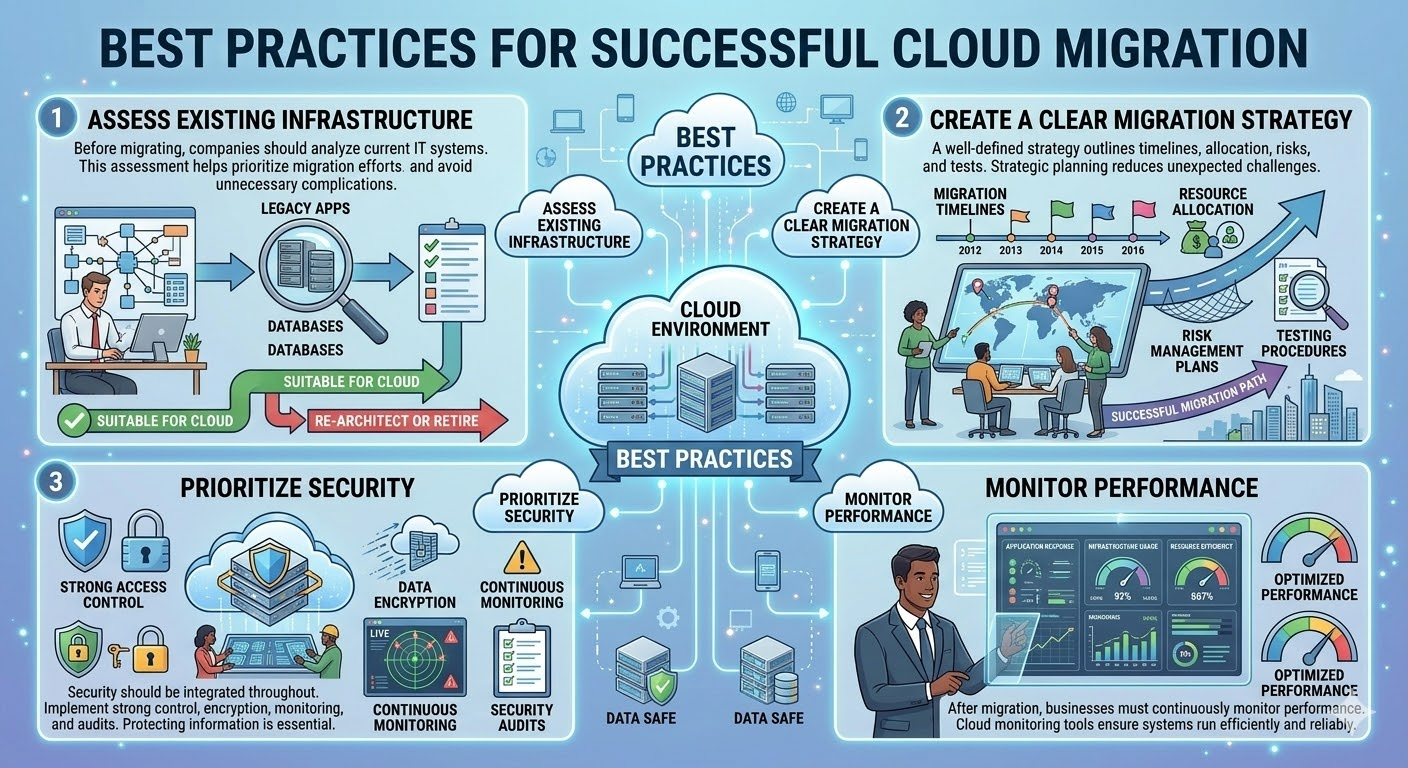
To ensure a smooth transition to the cloud, organizations should follow proven best practices.
Assess Existing Infrastructure
Before migrating, companies should analyze their current IT systems to determine which workloads are suitable for cloud environments.
This assessment helps prioritize migration efforts and avoid unnecessary complications.
Create a Clear Migration Strategy
A well-defined cloud migration strategy outlines:
- Migration timelines
- Resource allocation
- Risk management plans
- Testing procedures
Strategic planning reduces unexpected challenges during migration.
Prioritize Security
Security should be integrated throughout the migration process.
Organizations should implement:
- Strong access control policies
- Data encryption
- Continuous monitoring
- Security audits
Protecting sensitive information is essential during and after migration.
Monitor Performance
After migration, businesses must continuously monitor application performance and infrastructure usage.
Cloud monitoring tools help ensure systems run efficiently and reliably.
The Future of Cloud Migration
Cloud migration will continue to grow as businesses pursue digital transformation initiatives.
Emerging technologies such as artificial intelligence, machine learning, and edge computing are further accelerating cloud adoption.
Future trends in cloud migration include:
- Multi-cloud strategies
- Cloud-native application development
- Serverless computing
- AI-driven infrastructure management
As technology evolves, cloud environments will become even more powerful and flexible.
Organizations that adopt cloud migration early gain a competitive advantage by building scalable and resilient IT systems.
Conclusion
Cloud migration has become a critical strategy for organizations seeking to modernize their IT infrastructure and remain competitive in a digital-first world. By moving workloads to the cloud, businesses can improve scalability, enhance security, reduce costs, and accelerate innovation.
Although the migration process can present challenges, careful planning and the right expertise ensure a smooth transition.
With professional support from SYNEXRA TECHNOLOGY SOLUTIONS CO., LTD., companies can successfully implement cloud migration strategies that unlock the full potential of cloud technology and drive long-term business growth.