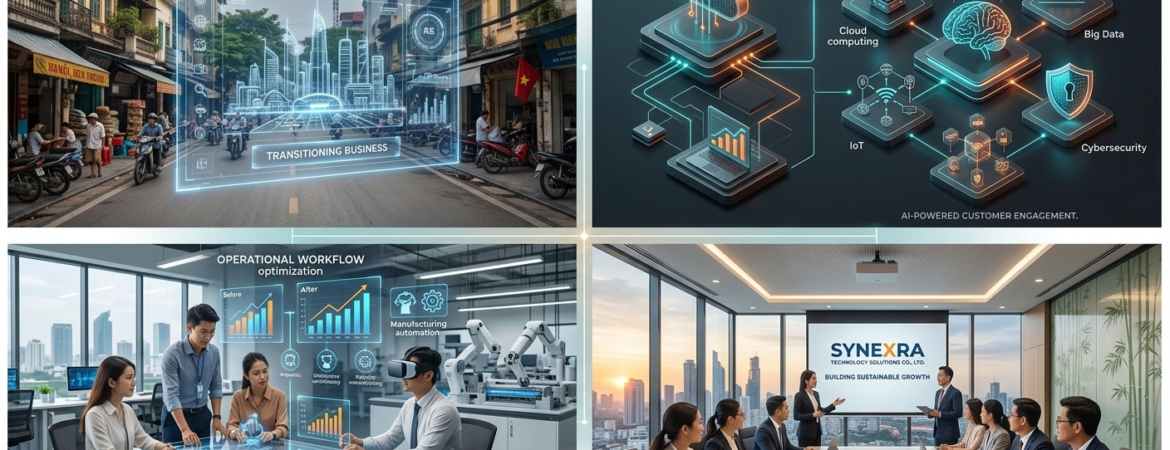
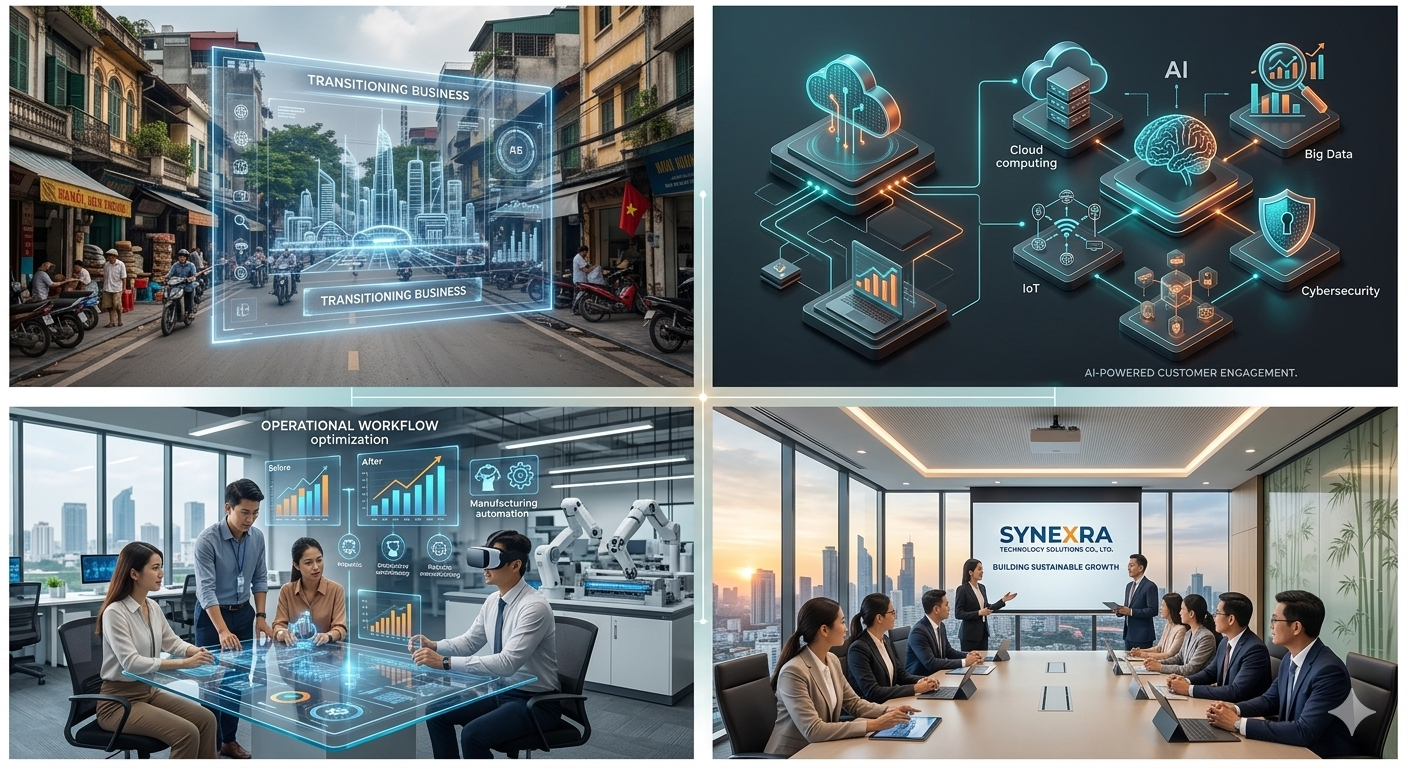
In the modern business landscape, organizations face constant pressure to innovate, improve efficiency, and deliver better customer experiences. Rapid advancements in technology have changed the way companies operate, communicate, and compete in the global market. Businesses that fail to adapt to these technological changes risk falling behind their competitors. This is why digital transformation has become a critical strategy for companies aiming to achieve long-term growth and sustainability.
Digital transformation involves integrating digital technologies into all aspects of business operations. It goes beyond adopting new tools or software; it requires rethinking processes, improving organizational culture, and creating innovative solutions that enhance value for customers. Leading technology partners such as SYNEXRA TECHNOLOGY SOLUTIONS CO., LTD. understand that successful digital transformation enables businesses to streamline operations, enhance decision-making, and unlock new opportunities for growth. This article explores the concept of digital transformation, its benefits, and how organizations can implement it effectively.
Understanding Digital Transformation
What Is Digital Transformation?
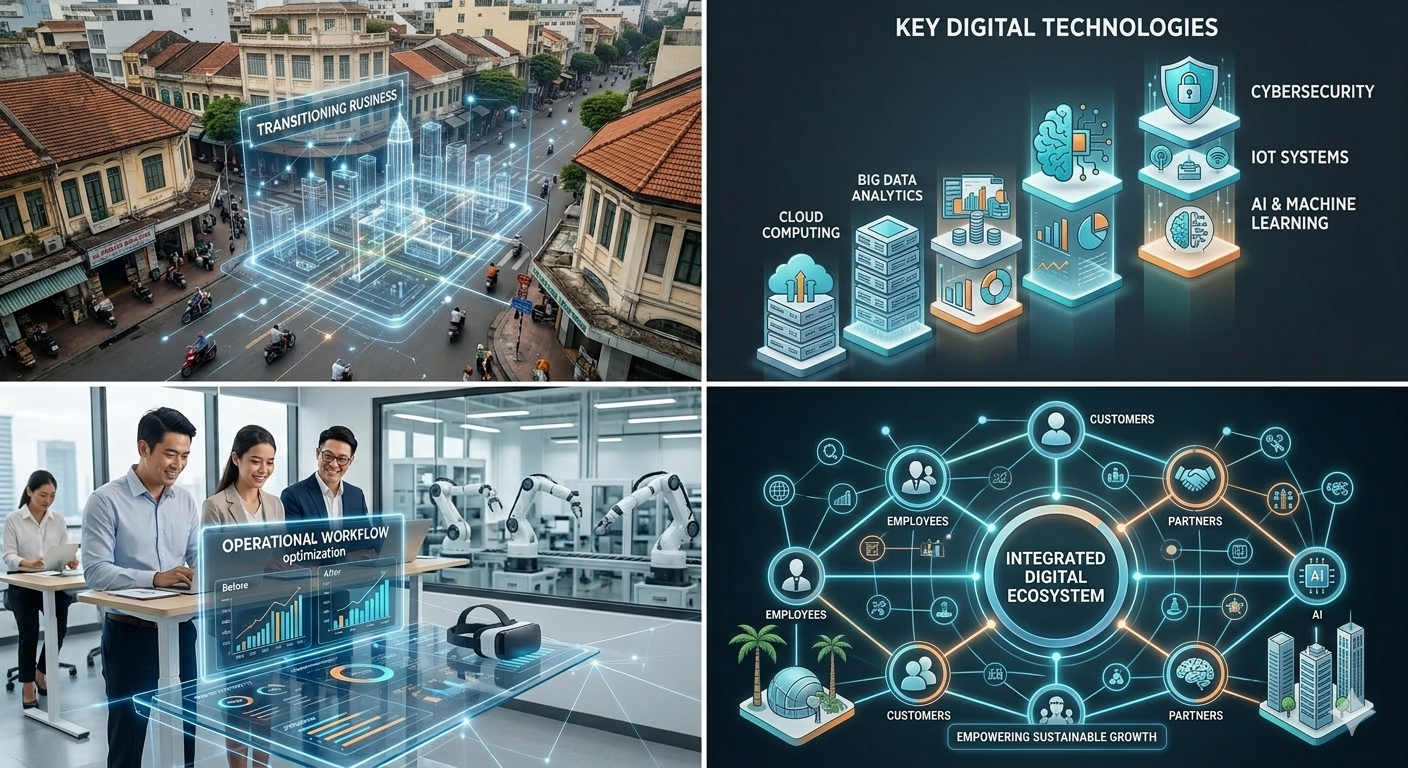
Digital transformation refers to the process of using digital technologies to fundamentally change how businesses operate and deliver value to customers. It involves adopting modern tools such as cloud computing, artificial intelligence, data analytics, automation, and digital communication platforms.
Unlike simple technology upgrades, digital transformation focuses on improving overall business processes and creating new capabilities.
Key aspects of digital transformation include:
- Automating manual processes
- Improving data-driven decision-making
- Enhancing customer experiences
- Integrating digital tools across departments
- Building more agile and innovative business models
These improvements help organizations operate more efficiently and remain competitive in the digital age.
The Evolution of Digital Business
The concept of digital transformation has evolved over time as technology continues to advance.
In the past, businesses primarily used digital tools to automate basic tasks such as accounting or record keeping. Today, organizations rely on sophisticated digital ecosystems that connect employees, customers, and partners in real time.
Technologies driving digital transformation include:
- Cloud computing platforms
- Artificial intelligence and machine learning
- Internet of Things (IoT) devices
- Data analytics and business intelligence tools
- Automation and robotic process automation (RPA)
These technologies enable companies to operate more efficiently and respond quickly to changing market demands.
Why Digital Transformation Is Essential for Business Growth
Enhancing Operational Efficiency
One of the primary benefits of digital transformation is improved operational efficiency. By automating repetitive tasks and integrating digital systems, organizations can reduce manual workloads and streamline workflows.
For example, digital platforms can automate processes such as:
- Inventory management
- Customer service requests
- Financial reporting
- Supply chain tracking
Automation reduces human error and allows employees to focus on higher-value activities.
Improving Customer Experience
Modern customers expect fast, personalized, and convenient services. Digital transformation enables businesses to meet these expectations through digital communication channels and data-driven insights.
Companies can use digital technologies to:
- Provide online customer support
- Offer personalized product recommendations
- Improve mobile and web experiences
- Deliver faster service responses
A better customer experience leads to stronger brand loyalty and increased revenue.
Enabling Data-Driven Decision Making
Data has become one of the most valuable assets for modern organizations. However, collecting data alone is not enough—businesses must be able to analyze and use it effectively.
Digital transformation introduces advanced data analytics platforms that help organizations analyze large volumes of data in real time.
These insights allow leaders to:
- Identify market trends
- Optimize business strategies
- Improve product development
- Predict customer behavior
Data-driven decision-making improves accuracy and supports strategic planning.
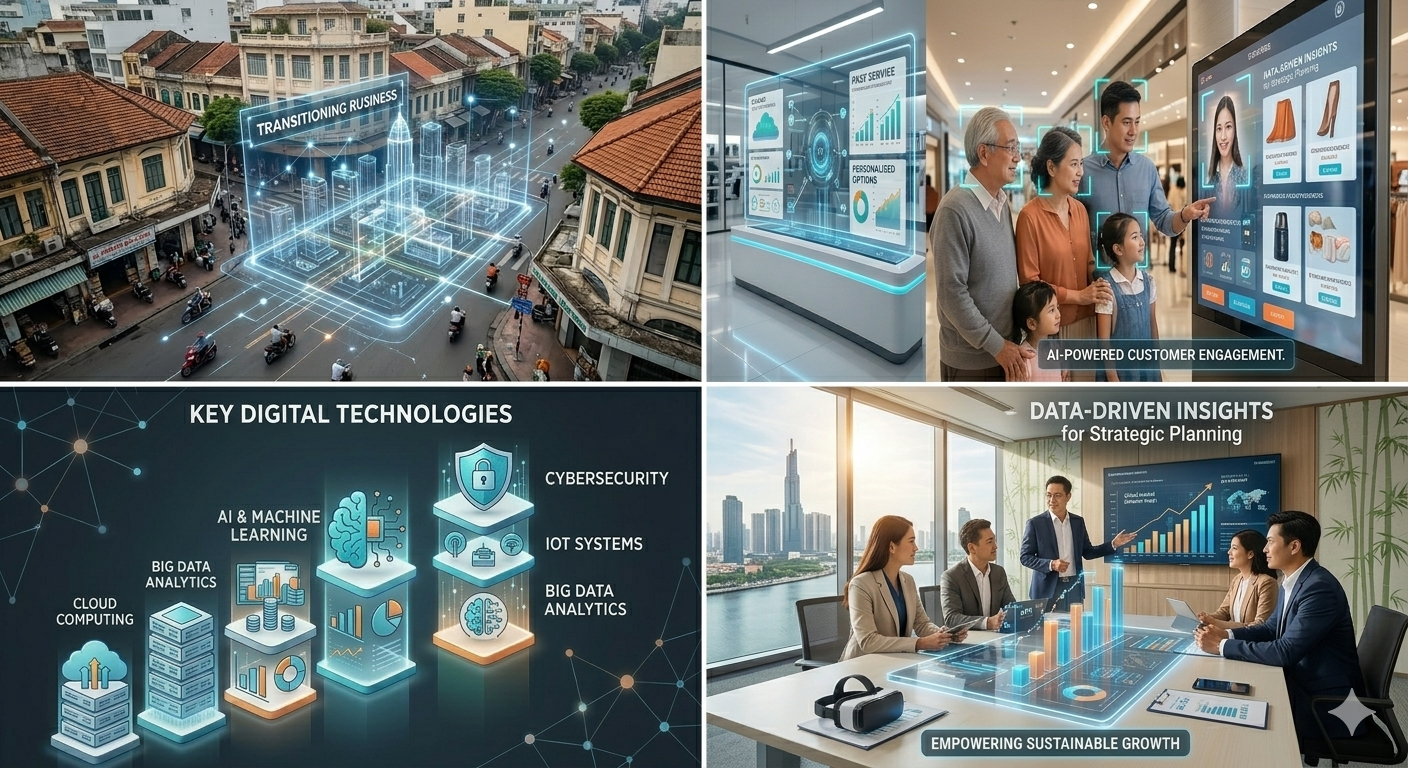
Key Technologies Driving Digital Transformation
Cloud Computing
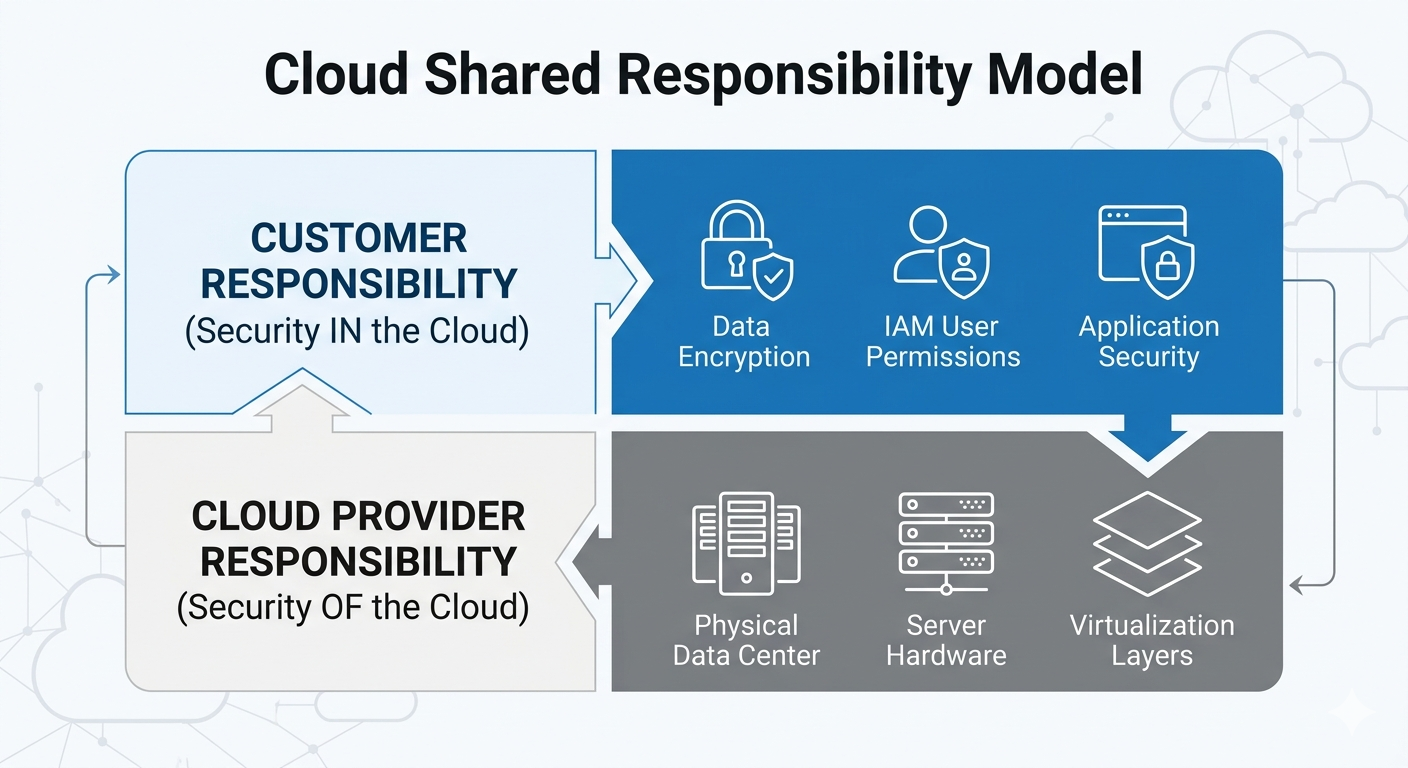
Cloud computing is a fundamental technology that supports digital transformation initiatives and requires strong cloud security strategies for modern businesses.
Cloud platforms provide scalable computing resources that allow businesses to store data, host applications, and collaborate remotely.
Benefits of cloud computing include:
- Reduced infrastructure costs
- Increased system flexibility
- Improved collaboration
- Faster deployment of digital services
Many organizations migrate their systems to cloud environments as part of their digital transformation strategies.
Artificial Intelligence and Automation
Artificial intelligence (AI) and automation technologies are transforming business operations by performing tasks that previously required human effort.
Examples of AI-driven applications include:
- Chatbots for customer support
- Predictive analytics systems
- Automated fraud detection
- Intelligent workflow automation
These technologies increase efficiency and improve service quality.
Data Analytics and Business Intelligence
Advanced data analytics platforms help businesses convert raw data into actionable insights.
Business intelligence tools provide visual dashboards and reports that help leaders understand performance metrics and identify improvement opportunities.
Data-driven insights are critical for optimizing operations and making informed business decisions.
Internet of Things (IoT)
The Internet of Things connects physical devices such as sensors, machines, and equipment to digital networks.
IoT technologies allow businesses to monitor and analyze real-time data from connected devices.
Industries such as manufacturing, logistics, and healthcare use IoT to improve operational visibility and efficiency.
Steps to Implement Digital Transformation
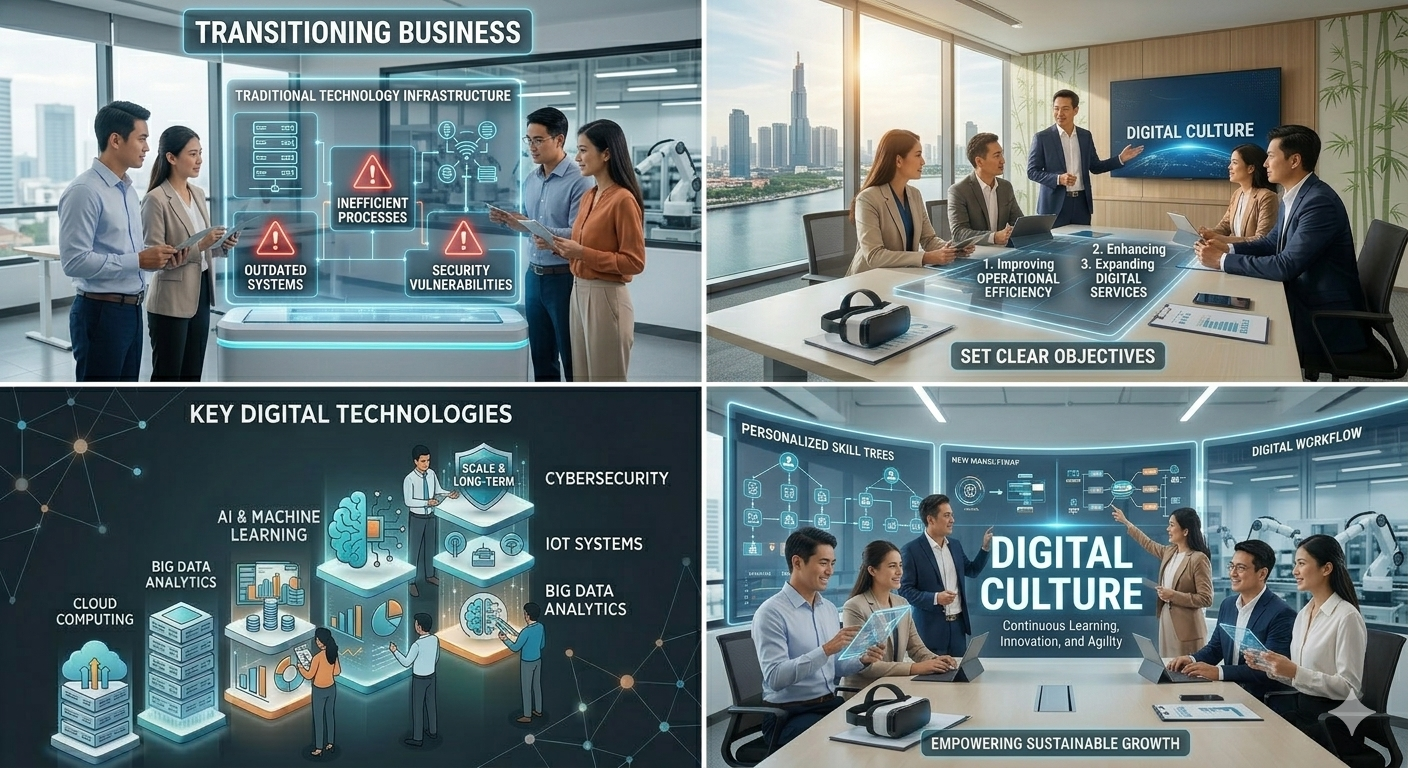
Assess Current Technology Infrastructure
The first step in any digital transformation initiative is evaluating the organization’s existing technology infrastructure, often with guidance from IT consulting for enterprise technology strategy.
Businesses must identify:
- Outdated systems
- Inefficient processes
- Security vulnerabilities
- Integration challenges
Understanding the current environment helps organizations determine which technologies require upgrades or replacements.
Define Clear Business Objectives
Digital transformation should align with specific business goals. Organizations must define what they want to achieve through digital initiatives.
Common objectives include:
- Improving operational efficiency
- Enhancing customer experiences
- Expanding digital services
- Increasing data analytics capabilities
Clear objectives guide technology investments and ensure measurable results.
Invest in the Right Technologies
Choosing the right digital technologies is essential for successful transformation.
Businesses should prioritize technologies that address their operational needs and provide long-term scalability.
Working with experienced technology partners can help organizations identify the most effective solutions.
Train Employees and Foster Digital Culture
Digital transformation is not only about technology; it also requires cultural change within the organization.
Employees must learn how to use new digital tools effectively and adapt to new workflows.
Providing training programs and encouraging innovation helps organizations build a digital-first culture.
Challenges in Digital Transformation
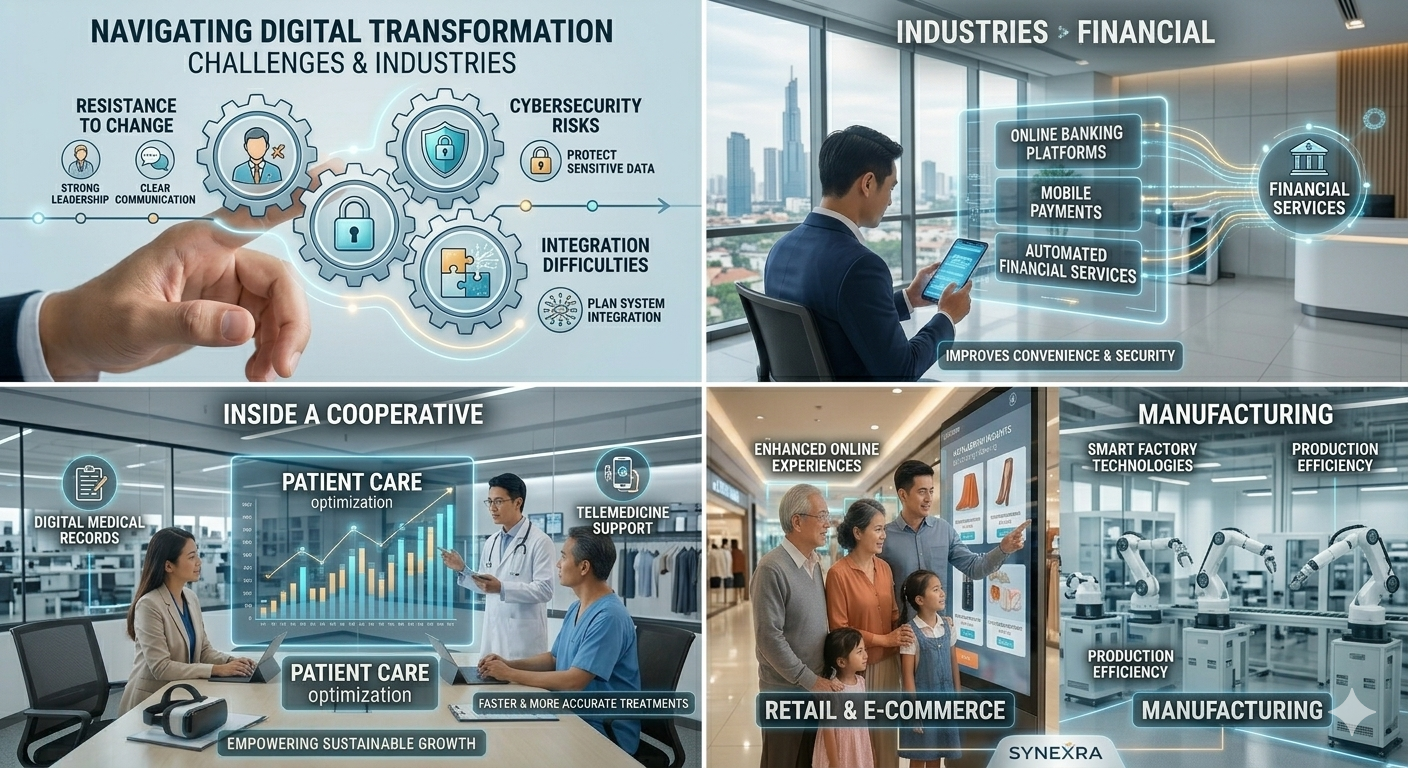
Resistance to Change
Employees and managers may resist adopting new technologies due to fear of disruption or lack of familiarity.
Strong leadership and clear communication are necessary to encourage acceptance of digital initiatives.
Cybersecurity Risks
As organizations adopt digital technologies, they may expose themselves to new cybersecurity risks.
Digital transformation strategies must include robust security measures to protect sensitive data and systems.
Integration Difficulties
Integrating new technologies with existing systems can be complex.
Organizations should carefully plan system integrations to ensure compatibility and minimize disruptions.
Industries Leading Digital Transformation
Financial Services
Banks and financial institutions are adopting digital technologies to provide online banking platforms, mobile payment systems, and automated financial services.
Digital transformation improves convenience and security for customers.
Healthcare
Healthcare providers use digital technologies to improve patient care, manage medical records, and support telemedicine services.
Digital transformation helps healthcare organizations deliver faster and more accurate treatments.
Retail and E-Commerce
Retail companies are leveraging digital transformation to enhance online shopping experiences, optimize supply chains, and analyze customer behavior.
Digital platforms allow retailers to provide personalized services and improve operational efficiency.
Manufacturing
Manufacturers are implementing smart factory technologies that integrate automation, IoT sensors, and advanced analytics.
These innovations improve production efficiency and reduce operational costs.
The Future of Digital Transformation
Digital transformation will continue to shape the future of business as new technologies emerge.
Trends that will influence future digital strategies include:
- Artificial intelligence-driven automation
- Advanced cybersecurity systems
- Edge computing and distributed networks
- Real-time data analytics platforms
- Intelligent digital ecosystems
Organizations that embrace these innovations will gain competitive advantages and drive sustainable growth.
Conclusion
In the rapidly evolving digital economy, businesses must continuously adapt to new technologies and changing customer expectations. Digital transformation provides organizations with the tools and strategies needed to modernize operations, improve efficiency, and create innovative services.
By integrating digital technologies into their processes, businesses can enhance customer experiences, improve data-driven decision-making, and unlock new growth opportunities. However, successful digital transformation requires careful planning, strategic investment, and a culture that embraces innovation.
Forward-thinking technology partners such as SYNEXRA TECHNOLOGY SOLUTIONS CO., LTD. play a crucial role in helping organizations navigate their digital transformation journeys. With the right technology strategy and expert guidance, businesses can build resilient digital infrastructures and achieve sustainable success in an increasingly digital world.